The Odyssey Fuelling Italy’s Boom
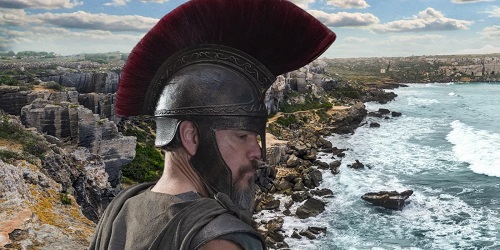
TORONTO – International cinema possesses a nearly magical power: it can transform the raw beauty of a country’s regional landscapes into an extraordinary engine for economic growth. Today, that transformation is being experienced across Southern Italy, driven by Christopher Nolan’s blockbuster $250 million production, The Odyssey. Official projections from Italy’s national film tourism portal confirm that Italian locations featured in the film are bracing for an induced revenue boom projected to exceed €250 million over the next three years.
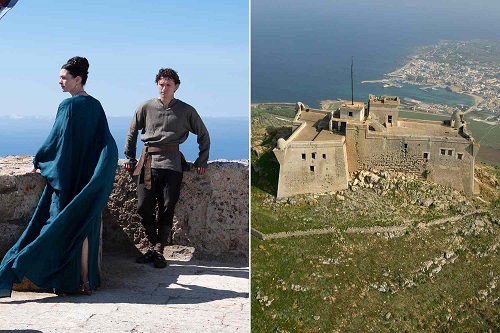
These figures signal a massive transformation that will reshape local regional infrastructure. Nolan’s team shot entirely on location, thrusting unique Mediterranean hidden gems into the global spotlight. Favignana Island, tucked into the Egadi archipelago off Sicily, serves as the primary visual anchor, with its pristine coastal coves and the remote ruins of Castello di Santa Caterina standing in for Odysseus’s home kingdom of Ithaca.
Further south, the volcanic drama of the Aeolian Islands – specifically the cliffs of Lipari, the sulfur landscapes of Vulcano and the waters around Panarea – portray the mythical domain of Aeolus. Even the Laziale coast of Ostia was utilized for complex maritime set pieces.
For small tightly-knit island communities, managing this sudden influx of global travelers is a monumental challenge. An economic injection of €250 million forces an immediate upgrade to regional infrastructure – which is great. Local municipalities will be rapidly modernizing maritime transit and expanding seasonal hospitality services. One would assume so, at least.
For perspective, the closest recent historical precedent is the tourism spike experienced by Taormina following the release of HBO’s The White Lotus. That single television production permanently altered travel trends in eastern Sicily for years. Yet, while that series captured contemporary wealth, Nolan’s film operates on a far grander historical scale.
It proves that classical culture, regional art, and ancient history are not static museum pieces, but active economic assets. Homer’s epic poetry, composed thousands of years ago, might just be the impetus for some of Italy’s rural communities to build modern roads, ports, and commercial corridors today.
Naturally, a commercial operation of this magnitude does not arrive without intellectual debate. Hollywood, in this case under the stewardship of British Director Christopher Nolan, has delivered a highly modernized interpretation of the epic, taking considerable creative license.
The studio’s choice to rely on an entirely non-Greek cast (led by Matt Damon and Tom Holland) has ignited fierce cultural pushback, even prompting formal open letters of protest from Greek cultural organizations. Scholars note that by shifting much of the traditional geography to Italian shores and utilizing American accents, the film presents a fractured, westernized version of classical mythology to younger audiences.
For the Italian public and their creative industries, however, the pride of seeing Italian coastlines, regional film commissions, and maritime workforces at the absolute center of global pop culture might overshadow academic grievances. Odysseus’ long journey home has effectively anchored itself in the Tyrrhenian Sea, and for Italy’s southern islands, the economic future looks as legendary as the myth itself.
Images of The Odyssey and Santa Caterina fortress in Sicily, Italy courtesy of Universal Studios

Massimo Volpe is a filmmaker and freelance writer from Toronto: he writes reviews of Italian films/content on Netflix