An Italian Touch on a French Opera
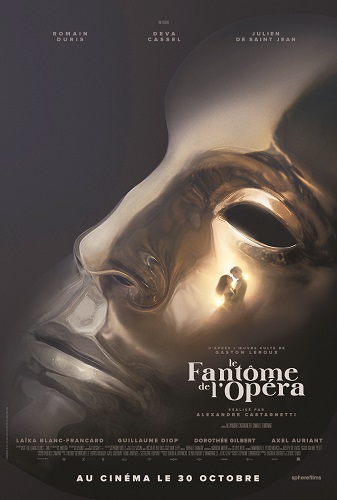
TORONTO – Cinema purists are about to get an unexpected treat this autumn with a bold, contemporary reimagining of a classic. Alexandre Castagnetti’s new French-language romantic thriller, Le Fantôme de l’Opéra, chose the Rome Film Festival to host its highly anticipated world premiere. While the film brings audiences directly into the historic halls of Paris’s Opéra Garnier, its artistic heartbeat is significantly Italian.
The production serves as a unique cultural bridge, driven by a director and a leading lady who both embody deep Italian roots with profound connections to France. Director Alexandre Castagnetti was born in Chieri, Italy, to Italian parents before his family relocated to France during his childhood.
Similarly, his leading star, the captivating Deva Cassel, was born in Rome and raised extensively in Italy by her mother, the iconic screen siren Monica Bellucci, while inheriting a French lineage from her father, Vincent Cassel. This dual identity allows the duo to inject a distinctly Italian passion into a traditionally rigid French masterpiece.
Together, they are successfully dragging Gaston Leroux’s 1910 gothic novel into the modern era, explicitly designing it to capture a younger, contemporary audience. The film swaps traditional operatic singing for high-stakes classical ballet, transforming the plot into a moody, modern psychological romance.
Castagnetti has openly noted that he drew heavy inspiration from the Twilight saga, blending dark, atmospheric tension with youthful romance. The director has also cited a strong cinematic debt to Brian De Palma, whose highly stylized, theatrical thrillers heavily inform the film’s sweeping camera movements and dramatic staging within the opera house walls.
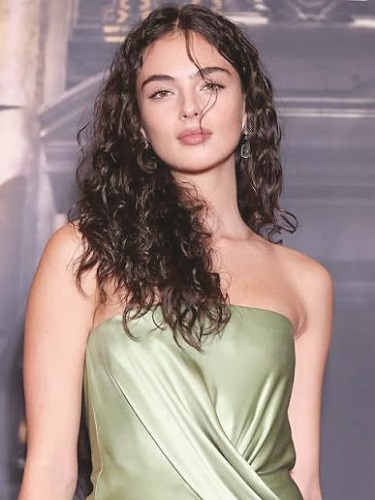
Following its initial festival screenings, early reviews have critics gushing over Deva Cassel’s hypnotic screen presence. Embodying the role of the talented young ballerina Anastasia Marescu, reviewers note that Cassel commands the frame with an effortless, raw elegance.
The praise suggests she is finally emerging from her mother’s cinematic shadow and firmly establishing her own identity as a premier actress to watch. Reflecting on how she balances her complex dual heritage, Cassel summed up her roots in a recent interview: “I like to say I’m an Italian with a French attitude”, while adding that “Italy represents warmth, food, and family”.
Predictably, French traditionalists may not entirely appreciate this loose, radical reinvention of their sacred literary material, which replaces the classic disfigured opera ghost with a brooding, enigmatic modern pianist. However, what the film lacks in strict fidelity to the original text, it more than makes up for in style.
In fact, many critics are already suggesting that the movie’s dark, hyper-stylized aesthetic and tense pacing carry a palpable Dario Argento influence, paying an unspoken homage to classic Italian Giallo horror and Argento’s own legendary ties to the Phantom story.
By infusing the project with a distinctly Italian touch, Castagnetti and Cassel are breathing vibrant new life into a century-old tale, exposing a timeless classic to an entirely new generation of viewers.
Poster image courtesy of SND Films, photo of Deva Cassel courtesy of Coadic Guirec
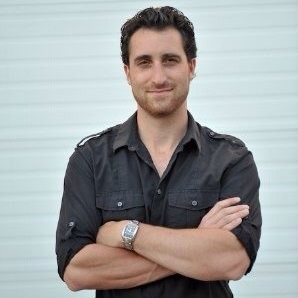
Massimo Volpe is a filmmaker and freelance writer from Toronto: he writes reviews of Italian films/content on Netflix