Italian Documentary Sparks Controversy
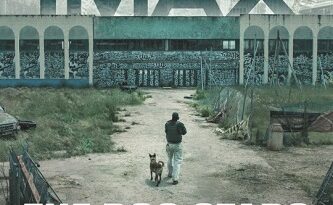
TORONTO – Just days ago, the Ministry of Culture’s film selection committee in Italy, a panel of experts who approve applications for public grants, saw a third member resign. The committee, made up of fifteen members, is under intense scrutiny this month after denying retroactive funding to a documentary titled All the Evil in the World, by Simone Manetti.
Three committee members, Paolo Mereghetti (film critic), Massimo Galimberti (story editor) and most recently Ginella Vocca (MedFilm Festival Founder), resigned in protest over the decision. Left-leaning critics view the selection committee’s rejection of funds as a targeted move against a sensitive politic topic. But the committee insists that the applicants for funding are judged solely on how extensively they promote Italian heritage, language or territory.
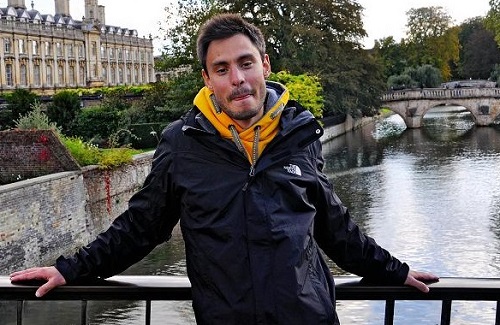
All the Evil in the World tells the story of Giulio Regeni, a PhD student at the University of Cambridge who had been researching Egypt’s independent trade unions. While in Cairo, Regeni’s interviews with street vendor unions put him on Egypt’s NSA (National Security Agency) watch list.
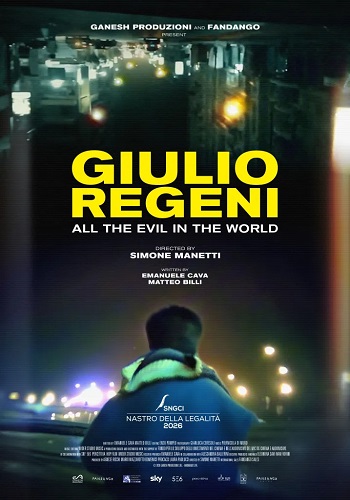
Tragically, the young Italian was found dead in a ditch along the Cairo-Alexandria highway on February 3 2016, just over a week after he had disappeared. His body was found with bruises, bone fractures and cigarette burns, though investigators concluded that the torture was inflicted “in stages”.
Egypt’s security forces suspected the Italian student of being a potential British Spy, and an instigator of anti-government mobilization. In a country that likens its labour leaders to terrorists and terror organizations, independent trade unions [they claim] would of course threaten the country’s economic stability through strikes if left unchecked.
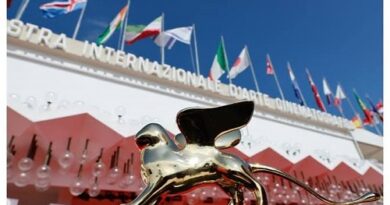
The documentary film had in fact wrapped its production in late 2025 and started its theatrical release in February of this year. Among the various awards it had received was the Nastro d’Argento prize, one of the country’s most prestigious cinematic honours – handed out by the Italian National Syndicate of Film Journalists.
The film’s Producers, Fandango and Ganesh Produzioni, made it with a budget of €600,000, with nearly half of it secured during the development phase. The initial financing came from private investors. And as per the usual route with independent filmmaking, the gap financing came from bank loans, which were being leveraged against Italy’s 40% tax credit and grant money.
With the tax credit yet to be approved and the grant denied, Fandago and Ganesh are now left with a bank loan they can’t pay off with state funds. The controversy over the documentary is layered, as it not only raises questions around the alleged politicization of the nation’s cultural sector, but exposes the fragility of the film industry’s entire infrastructure.
Images courtesy of Fandango and Ganesh Produzioni
Massimo Volpe is a filmmaker and freelance writer from Toronto: he writes reviews of Italian films/content on Netflix