Venice Puts Funding Under a Microscope

TORONTO – While the Venice Film Festival continues to face intense scrutiny over a main competition lineup featuring only a single female director, the festival prepares to showcase two highly anticipated works: Marco Bechis’s Back to Buenos Aires and Alina Marazzi’s La Ragazza Con La Leica. Both films have landed coveted spots at Italy’s premier cinematic event. Yet, their presence brings another complex institutional debate to the surface.
Independent filmmakers across Italy are currently questioning the Ministry of Culture over its new “national interest” funding criteria. Critics worry these stringent cultural filters could function as a gatekeeping apparatus, potentially suppressing politically sensitive screenplays before they can access domestic financing.
At first glance, the selection of these two hard-hitting, politically charged narratives seems to contradict accusations that the state is curbing provocative art. However, a closer look at the logistical and financial architecture of both productions reveals the exact structural shifts that concern independent creators.
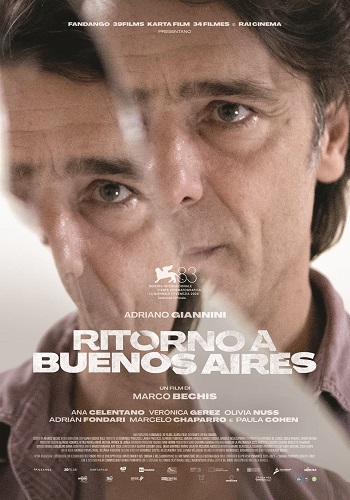
To understand the friction, one must examine how these filmmakers had to structure their projects. Marco Bechis’s Back to Buenos Aires follows an Italian doctor returning to Argentina to testify against the brutal military junta officers who tortured him.
Due to a deficit in local infrastructure and adequate domestic financing, Bechis could not shoot the film within its natural Argentine setting.
Instead, the production retrofitted an aula bunker (bunker courtroom) in Turin, Italy – originally built to try domestic terrorist groups during Italy’s violent “Years of Lead” – to double as a Buenos Aires tribunal.
Similarly, Alina Marazzi’s La Ragazza Con La Leica targets the devastating human toll of totalitarianism. The historical biopic tracks Gerda Taro, the pioneering anti-fascist photojournalist who documented the front lines of the Spanish Civil War alongside Robert Capa, highlighting intellectuals fleeing Mussolini’s Italy.
The critical catch is that while both films did successfully secure public Italian state funding, their subsidies were greenlit and locked in well before the current administration overhauled the system. They were approved before the ministry implemented its new ideological “national interest” filters.
Furthermore, both projects relied heavily on international co-productions to fully clear their budgets. Bechis’s feature relied on a patchwork of Italian, Brazilian, and French financial entities, while Marazzi’s biopic required substantial backing from German and Swedish co-producers.
However, viewing this shift solely through the lens of political gatekeeping misses a deeper conversation about cultural self-determination. For decades, Italian filmmakers have watched from the sidelines as Hollywood studios appropriated their history, landscape, and identity through an oversimplified, external foreign lens.
By tightening the cultural criteria, the current framework also functions as a structural push for Italians to tell Italian stories firsthand, drawing directly from a rich domestic reservoir of history and literature.
Ultimately, Back to Buenos Aires and La Ragazza Con La Leica prove local filmmakers hold the unique authority to dissect history firsthand, bypassing Hollywood’s lens. These productions show that navigating tighter regulations is less about censorship and more about preserving the authentic, complex voices that keep Italy’s rich cultural memory alive.
Images courtesy of Fandango, Vivo Film, and Rai Cinema

Massimo Volpe is a filmmaker and freelance writer from Toronto: he writes reviews of Italian films/content on Netflix