Samani Captures Vanished Era
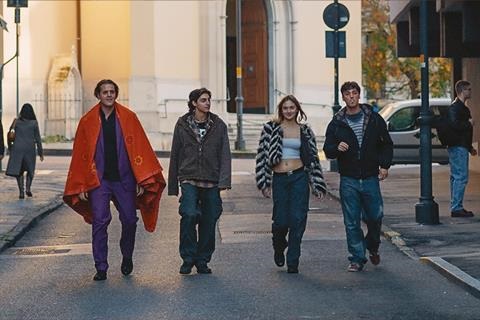
TORONTO – Following its highly acclaimed world premiere at the Venice International Film Festival last year – where it secured the Best Actor prize – Laura Samani’s A Year of School (Un anno di scuola) has officially transitioned to its wide theatrical rollout under Lucky Red. Loosely adapted from Giani Stuparich’s classic 1929 novella, the film immediately commands attention by shifting its timeline to 2007 Trieste.
The story follows Fred, a young Swedish girl who enrolls as the solitary female student in an all-male technical high school. Her arrival instantly disrupts the delicate equilibrium of three inseparable best friends. For modern viewers, the film’s most arresting feature is its status as a highly specific nostalgic capsule. It captures the very last era of teenage life before the smartphone explosion.
Samani intentionally freezes a moment in time that feels remarkably distant today, beautifully capturing a tactile world of analogue sharing. The narrative thrives on these small, physical intimacies, like sharing a single wire of iPod earphones between two people. It also highlights treating the act of burning a custom mix-CD as a monumentally heavy emotional declaration. This serves as a stark reminder of how youth culture functioned just before digital algorithms took over our social lives.
This vivid environment allowed the filmmaker to mine her own history, subverting the typical clichés so common in cinema. Samani drew heavily from her personal high school experiences growing up in Trieste, where she was often the sole girl in an all-male group.
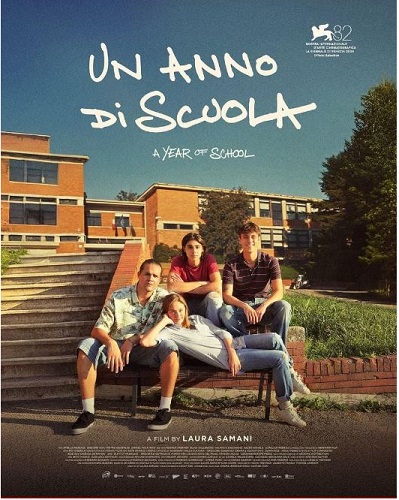
Reflecting on that dynamic, Samani noted: “When you are the only girl in a male space, you quickly learn that acceptance comes at a cost. You find yourself shedding your own femininity just to be viewed as an equal peer”.
Consequently, the central plot explores the psychological trade-offs of entering these spaces. Fred actively alters her behavior and wardrobe – literally choosing to “man up” – just to survive the male gaze and maintain her status within the group.
Explaining this creative choice, Samani noted: “I wanted to capture that precise moment in adolescence where you willingly blur your own identity simply to fit in, unaware of how much of yourself you are leaving behind”.
This thematic shift has sparked fascinating debates among critics, particularly regarding how the movie subverts its literary source material. By transforming the book’s original Italian protagonist into a foreign Swedish outsider, the narrative defuses some of the historical social critique.
Instead, it replaces it with a deeply intimate, modern study of youthful sexual tension and gender barriers. Ultimately, A Year of School succeeds because it refuses to treat the past as a historical artifact.
Through its beautifully curated 2007 soundtrack and heartfelt performances, the film reminds us of a unique time. The groundwork for how we understand modern teenage isolation was laid in those final, analog years. It is a beautifully realized film that proves Italian cinema can still capture the fragile magic of youth.
Images courtesy of Nefertiti Film and Rai Cinema

Massimo Volpe is a filmmaker and freelance writer from Toronto: he writes reviews of Italian films/content on Netflix