Ghosts of Turin’s Past
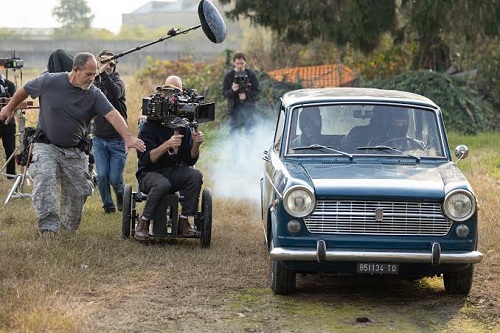
TORONTO – Italian moviegoers are about to get a gripping historical film with the upcoming release of Il Cileno (The Chilean). Directed by Sergio Castro San Martín, this intense cross-cultural drama functions as a deeply intimate study of Italy’s own troubled 1970s history. Landing its major world premiere in the iconic Piazza Grande at the 79th Locarno Film Festival, the film’s narrative begins in Latin America before it firmly transplants its main character into the volatile political underground of Turin.
What makes the film stand out is how it uses a foreign perspective to confront a raw mirror image of Italy’s ideological divides. The film’s plot follows Aldo Marín (Camilo Arancibia), a young socialist dissident fleeing General Pinochet’s brutal military regime. He seeks sanctuary across the Atlantic, settling in the heavy industrial landscape of 1976 Turin.
But as the narrative unfolds, Aldo’s attempt to build a quiet, anonymous life is shattered by the very talent that defines him: building bombs. He is quickly pulled into the orbit of Azione Rivoluzionaria, a real-life far-left militant group operating during Italy’s chaotic “Years of Lead”. An era named for the sheer number of bullets fired during decades of political bombings and violence.
Although exceptional in many ways, Aldo’s journey as a political refugee carries a striking parallel to the modern immigrant experience in Italy. Today, the Italian peninsula remains the primary European threshold for asylum seekers fleeing instability at home. The film doesn’t need to force the comparison, as the friction between a host country and its exiles is timeless.

It captures the isolation and economic vulnerability that can push marginalized newcomers toward radical underground spaces – a talking point frequently debated in modern social circles. The film however remains deeply rooted in Italy. This is heavily emphasized through the secondary plot involving Luciana (Sara Serraiocco), a local doctor running a clandestine network for illegal abortions.
While Aldo’s faction fights an armed war with explosives, Luciana’s circle fights what she believes is a social war for human rights. This subplot serves as a powerful historical reminder of the feminist mobilization that eventually gave rise to Italy’s Law 194 in 1978. For modern Italian audiences, this plotline will be hitting home during ongoing national debates over medical rights.
With an exceptional supporting cast featuring Gaetano Bruno and Lorenzo Richelmy, the filmmakers set out to recreate the tense atmosphere of 1970s northern Italy. The real Aldo Marín met his end when an explosive detonated prematurely in Turin in 1977. But almost fifty years later, Italian filmmakers are still revisiting his history to mirror present-day societal divides.
A reminder perhaps that the political ghosts of Italy’s past aren’t truly buried. Il Cileno just might leave audiences with the unsettling realization that yesterday’s tragedies are still shaping today’s conversations.
Images courtesy of Fandango

Massimo Volpe is a filmmaker and freelance writer from Toronto: he writes reviews of Italian films/content on Netflix