Bellocchio and Elkann Tackle the Savoy Legacy
TORONTO – Mainstream records have a tendency to overlook monumental figures when their stories do not fit a neat timeline. The recent announcement of Maestà (“Majesty”), a new historical drama co-written by the iconic Marco Bellocchio and director Ginevra Elkann, is poised to confront exactly this kind of historic amnesia. The film targets a highly volatile, yet purposefully neglected moment in time: the brief 27-day reign of Maria José of Savoy, the very last Queen of Italy.
The filmmakers feel that treating Maria José as a mere historical footnote or a passive observer of her own royal destiny is a mistaken interpretation. Born to Belgian royalty, she was thrust into an Italian monarchy that had actively cooperated with the fascist dictator Benito Mussolini.
Yet, standard historical documentation rarely captures the full scope of her reality. She was not a passive bystander. She was a fierce, surreptitious anti-fascist who openly detested the regime enveloping her husband’s family, even conducting secret diplomatic negotiations with the Allied forces behind her father-in-law’s back.
Maestà zeroes in on May 1946, a month suspended in absolute chaos. King Vittorio Emanuele III abdicated in a desperate, last-minute bid to save his family’s throne, handing power to his son, Umberto II. For less than four weeks, Maria José reigned as the “May Queen” before the Italian public voted in a historic referendum to eliminate the monarchy and exile the House of Savoy forever.
The genius of this upcoming project lies in its creative direction. Rather than serving a safe period piece designed to evoke nostalgia for royalty, Bellocchio and Elkann are focusing directly on the deep personal impact of a historic change. They are presenting a woman who was meticulously trained from childhood to occupy a throne, only to inherit an empire of nothingness.
Elkann elaborated on the tragic internal landscape of the character, noting: “Her tragedy is not defeat, but awareness: knowing she was born for something that will not happen. Telling Maria José’s story means showing the end of a world through the face of a single person, with respect for her intelligence, without nostalgia and without condemnation”.
The screenplay, co-written by Chiara Barzini, leans into a feminist lens of the institutional collapse. It cuts through the romanticized myths that subsequent generations have attempted to spin around the House of Savoy, focusing instead on the universal human tragedy of letting go of an identity built over a lifetime. “I am interested in women and men who witness the end of a world, who perceive its cracks and decline, but who remain emotionally attached to it”.
Much like other notable figures who’ve been minimized to benefit a simpler historical script, her complex position demands a more thorough exploration. Ultimately, this project aims to return to the figure of Maria José the historical importance she truly deserves.
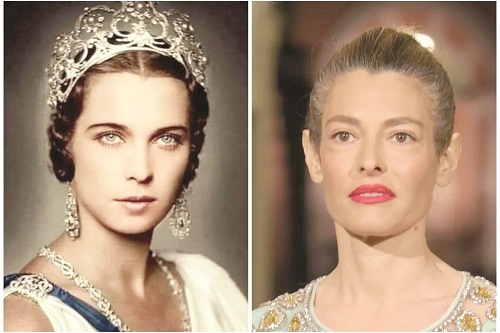
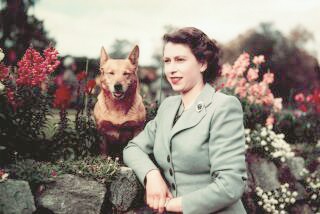
Image of Maria José of Savoy and Ginevra Elkann

Massimo Volpe is a filmmaker and freelance writer from Toronto: he writes reviews of Italian films/content on Netflix