Rome Embraces Rocky’s Roots
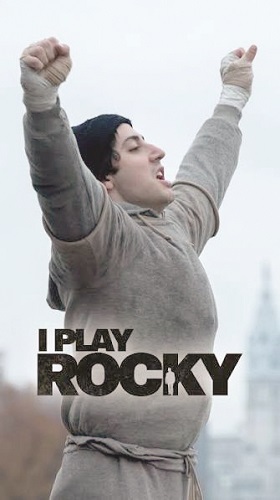
TORONTO – As the curtain rises on the 21st Festa del Cinema di Roma, local cinephiles are bracing for a massive, multi-day influx of international star power. Yet amidst the high-profile red carpets and sprawling festival slates, it is Peter Farrelly’s upcoming biographical drama, I Play Rocky, that promises to strike the most resonant cultural chord with Italian audiences.
The film, a detailed historical look at the desperate, near-mythic struggle of a young Sylvester Stallone trying to get his 1976 boxing classic made, acts as a cinematic mirror. It is a story that beneath its glossy Hollywood exterior, belongs fundamentally to the Italian diaspora.
Historically speaking, the concept of the “underdog” is often packaged as a purely American invention. But the narrative of Rocky resonates with a deeply ingrained transatlantic pride that predates the Rocky themes by generations. The heart of Farrelly’s biopic traces Stallone’s struggle to sell his script to Hollywood, but its story’s beats follow the typical friction of the Italian-immigrant experience.
With Matt Dillon cast as Francesco “Frank” Stallone Sr., the film grounds itself in the authentic struggles of a first-generation immigrant from Gioia del Colle, Apulia. Here, the narrative shifts from mere sports lore into an organic exploration of “capatosta” (stubborn resilience) – contrasting a father’s pragmatic survival instincts with a son’s burning artistic conviction.
The film also provides a necessary re-examination of cinema royalty by revisiting the casting of Talia Shire, portrayed here by Kiki Seto. Shire, born into the legendary Italian-American Coppola dynasty, famously brought Adrian Pennino to life – a character deliberately named after Shire’s own grandfather, the Italian composer Francesco Pennino.
By highlighting this connection, I Play Rocky shows how the emotional weight of cinema’s greatest fight franchise was shaped directly by the daughters and sons of Lucania and Puglia heritage, steering the Italian-American identity away from typical 1970s mafia tropes and toward a grounded blue-collar nobility.
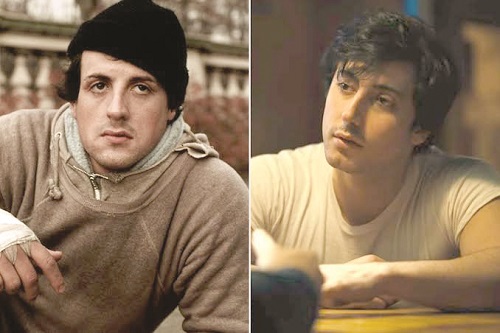
Perhaps the most fascinating overarching story of the film, however, lies in its casting of Anthony Ippolito as a young Stallone. Ippolito, an actor of full Italian descent, represents a stark evolution in how the community navigates Hollywood. The biopic explicitly captures a time when a struggling Stallone felt forced to audition under the generic pseudonym “Mike” just to escape schoolyard stigma and professional obscurity.
By contrast, Ippolito enters the frame in an era where a vowel-ending Italian surname is no longer a liability to a transactional talent agent, but a prestigious badge of authenticity. When Stallone ultimately coined the moniker “The Italian Stallion,” it was more than a clever marketing hook for a sports drama; it was a global branding moment that redefined working-class masculinity.
By centering its narrative on these organic cultural roots rather than generic Hollywood triumph, I Play Rocky proves to be an essential piece of heritage cinema. It anchors its high-energy Hollywood drama to a foundational truth: before Rocky Balboa ever became America’s favorite hero, he was Italy’s favorite son.
Images courtesy of Amazon MGM Studios

Massimo Volpe is a filmmaker and freelance writer from Toronto: he writes reviews of Italian films/content on Netflix