Italy’s Tennis Blueprint for Cinema
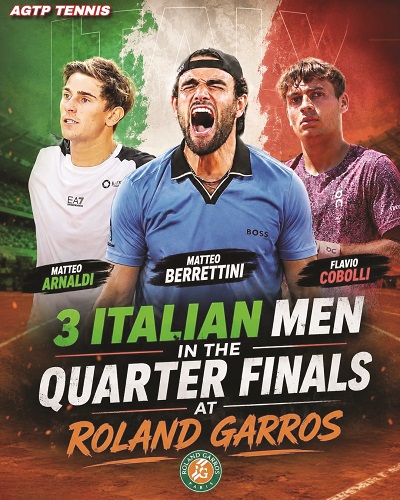
TORONTO – Italian male tennis athletes are on the verge of completely rewriting the history books. Matteo Berrettini, Matteo Arnaldi, and Flavio Cobolli have all advanced to the quarterfinals of the French Open, increasing the probability of an all-Italian Final. It would be a first in the male Grand Slam final and an absolute exclamation point on Italy’s historic tennis renaissance. But while the country is reveling in its tennis dominance, its cinema industry appears to be on a downward spiral.
But even a surface exploration of how tennis is structured in Italy elucidates the core flaws with the country’s film industry. The current tennis program in Italy raises its athletes away from monolithic state pipelines. Sinner, Berrettini, Arnaldi and Cobolli honed their skills at fiercely independent local academies, like many other currently ranked and rising Italian stars. Conversely, Italian cinema is codependent on the state, where public funding is not a bonus – it’s the foundation.
The key reform for tennis happened 15 years ago when the Italian Tennis and Padel Federation (FITP) pivoted from its old centralized model. Up to that point, the top teenagers in the country were all forced to move to a single national training center in Rome.
When the FITP decided to allocate their funds and resources to local clubs across the country everything changed.
Young players could stay with their families while the FITP would send tutors, psychologists and money to those local tennis clubs. Essentially, tennis players blossomed because they weren’t all reliant on the same well for water.
Italian indie filmmakers on the other hand, cannot make a film for less than €800,000, which is based on the wage mandates for a legally binding crew. The National Collective Labor Agreement for Italy’s film industry requires a minimum base crew of 25-35 people in order to qualify for production insurance and cultural certification.
Comparatively, indie filmmakers in North America tend to rely on the “passion and pizza” model, whereby film crews agree to work for free upfront in exchange for deferred payment or backend reward. This simply isn’t an option in Italy. Attempting a DIY or deferral-based film production in Italy will likely result in immediate set shutdowns and criminal labor charges.
The workaround should be to raise the budget privately, except in Italy most high-net-worth individuals don’t view indie cinema as a viable asset. But the more salient point is that the private sector has been conditioned to believe that the arts is the exclusive financial duty of the state. The angel investor and crowdfunding models simply don’t exist in Italy.
So how can cinema borrow from the tennis model? Decentralize the film ecosystem, and distribute public funds to grassroots film hubs across all regions; those hubs can provide free access to film equipment. Also, subsidize community-owned cinemas that are legally protected to exhibit indie films.
And finally, encourage emerging filmmakers to learn how to tell stories guerrilla style, on a small budget – through smaller grants. Perhaps then, a new generation of Italian filmmakers could unlock their total creative license.
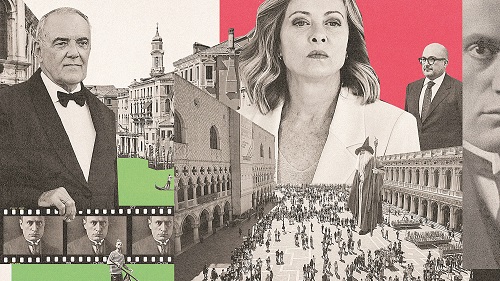
Illustration courtesy of Lincoln Agnew

Massimo Volpe is a filmmaker and freelance writer from Toronto: he writes reviews of Italian films/content on Netflix