Italy’s Radical Angel Investor
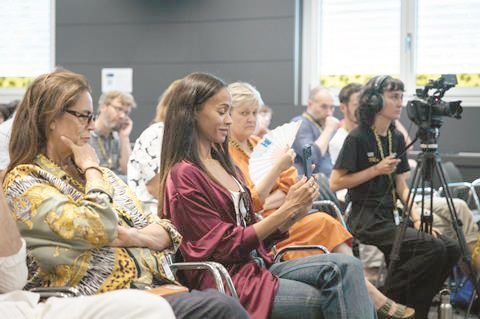
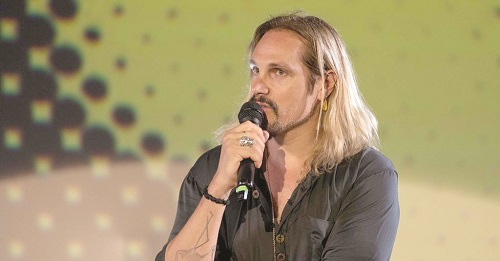
TORONTO – The matter of raw artistic obsession became a talking point at this year’s Locarno Film Festival. Delivering a keynote address a few days ago was Marco Perego, the former calcio player turned New York contemporary artist, who has rapidly transformed into independent cinema’s most aggressive angel investor. Standing on stage at Locarno Pro (with actress wife Zoe Saldana), Perego leveled a direct, unfiltered broadside against the entire industry.
His advice wasn’t gentle either. To a room packed with international producers and financiers, he issued a stark warning about the soul of independent art. Perego insisted that independent cinema must be built entirely on passion and creative risk rather than spreadsheets.
For those motivated purely by balance sheets, his message was uncompromising: “If you decide to be a producer in the independent world, don’t do it for the money”. He went a step further, telling the crowd that if cold financial returns are the priority, they should simply “go [work for] a bank”.
This aggressive stance is backed by an unprecedented hot streak at the world’s most prestigious film festivals. Operating under his Leaf Entertainment banner, Perego has established a staggering track record of identifying and protecting world-class auteur vision. While local institutions fret over institutional funding gaps, Perego achieved a historic artistic sweep at Cannes.
He became the first producer in the festival’s 79-year history to capture both top honors simultaneously, securing the Palme d’Or for Cristian Mungiu’s Fjord and the Grand Prix for Andrey Zvyagintsev’s Minotaur, while concurrently running James Gray’s Paper Tiger in the main competition.
Perego’s Locarno address directly channeled a nearly forgotten era in cinema history – a golden age when bold, wealthy patrons backed uncompromising auteurs almost purely for the sake of the art form. Today, that old patron model simply doesn’t exist.
The modern studio landscape is dominated by corporate accountants, committee-driven executives, and green-lighting structures completely divorced from actual creative instincts. Worse yet, the industry increasingly allows films to be made based on political agendas and DEI initiatives, rather than the intrinsic merit of a script.
Against this sterile executive culture, Perego’s philosophy offers a refreshing shield for the filmmaker. He demanded that producers understand their boundaries, telling the industry to “trust the vision of the director and stay out of their creative way”. Self-identifying as a disruptor, he made a defiant promise regarding artistic experimentation: “I’m going to fail so many times, but I promise, I will stand up”.
Yet, Perego’s artistic romanticism must balance with real-world consequence. Pure artistic vision cannot materialize without capital and box office performance. True mastery lies in smart, adaptive filmmaking that marries high artistry with entertainment value. Satisfying the business end keeps the entire ecosystem alive, ensuring the resources to build the next project.
Images of Marco Perego and Zo Saldano courtesy of Locarno Film Festival / Edoardo Nerboni
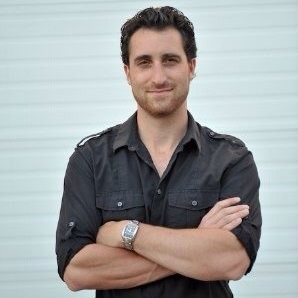
Massimo Volpe is a filmmaker and freelance writer from Toronto: he writes reviews of Italian films/content on Netflix