A Father’s Memoir Becomes Cinema
TORONTO – Social realism has been the backbone of Italian cinema since the post-war neorealist movement of the 1940s, led by filmmakers like Vittorio De Sica and Roberto Rossellini. While Italy’s box office is usually ruled by light comedies and escapism, Italian audiences have always shown a willingness to confront painful truths on screen.
That tradition helps explain why Paola Randi’s new drama – Se domani non torno – opened at number one at the Italian box office this month, beating out star-studded commercial releases. Arriving in theaters on November 5, just days before the third anniversary of Giulia Cecchettin’s 2023 murder, the film is based on her father Gino Cecchettin’s book Cara Giulia.
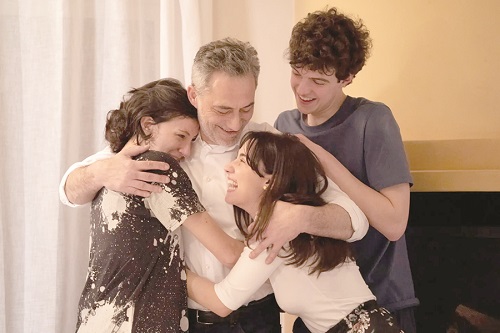
The plot: Set in the Veneto town of Vigonovo, the story follows widower Gino Cecchettin (played by Filippo Timi) and his children in the days after 22-year-old Giulia (Sabrina Martina) suddenly disappears. Structured almost like a classic tragedy, the film traces an ordinary family dealing with unimaginable private grief before their loss sparks a nationwide debate over violence against women and femminicidio.
On the whole, it is certainly a good thing that audiences and filmmakers are looking seriously at the roots of violence against women. Yet while the film honours a father’s grief with grace, the wider public reaction around it points to a noticeable blind spot in modern storytelling and reporting.
In Giulia’s real-life case, court records confirmed that her ex-boyfriend used a spy app to track her Instagram activity and contacts while sending her over 225,000 messages – a stark reminder of how deeply digital tools are tied to modern relationship abuse.
Still, for an industry known for social commentary, Italian cinema, and the wider public conversation, remains surprisingly quiet about how social media itself is harming all young people, and in particular young women every day.

While public debate rightly questions cultural habits and patriarchy when addressing femminicidio, far fewer voices look at how social media platforms are affecting the lives of young girls.
On a volatile online playground filled with constant comparison, cyberbullying, and digital abuse, teenage girls are left vulnerable and are experiencing record levels of anxiety and depression. Yet major movies, documentaries, and mainstream books examining that quieter crisis remain rare.
Director Paola Randi has said that Se domani non torno is meant to turn watching a movie into a shared civic moment, choosing reflection over spectacle. By “turning grief into awareness”, Randi is pointing to cinema’s role as a mirror for society.
Whereas standard crime dramas focus on the twists of a police investigation, Se domani non torno stays focused on the human fallout, asking audiences to pay closer attention to the world young people live in.
With strong acting and a respectful, sobering tone, this box office hit succeeds in sparking an important conversation, even if the next chapter of that conversation has yet to make it onto the big screen.
Images courtesy of Notorious Pictures

Massimo Volpe is a filmmaker and freelance writer from Toronto: he writes reviews of Italian films/content on Netflix