Italy Overhauls Its Cinema

TORONTO – Italy’s Senate passed a sweeping cinema reform bill this month that marks a major structural shift in the country’s media landscape. The legislation establishes a National Cinema and Audiovisual Agency, moving administrative management out of the Ministry of Culture’s direct hands. By setting up this new public group, the government is trying to protect the movie industry from complicated red tape and paperwork.
Naturally, this regulatory overhaul has drawn both immediate praise and sharp criticism from different corners of the industry. Culture Minister Alessandro Giuli hailed the reform as a “historic achievement for Italian culture,” praising the rare cross-party agreement. Supporters argue the change will finally bring administrative stability and clearer operational rules.
Yet, many independent filmmakers and creators remain deeply anxious about the agency’s true nature. Screenwriters’ and directors’ groups have protested the law, arguing it leaves the critical issues of the sector unresolved.
They are quick to point out that this is not a completely independent body. The Ministry of Culture still retains strategic oversight, holds ultimate veto power, and controls the appointment of the agency’s director and board.
In executing this pivot, Italy is trying to mirror France’s gold-standard agency, the CNC. The French system has deep cultural power and generates its own money by collecting taxes on movie ticket sales to fund local filmmakers.
By trying to build a permanent institution, Italy is moving away from fragile models like Spain’s. The Spanish model depends completely on unpredictable, highly political government budget debates every single year – something Italian politics is too familiar with.
To a North American observer, this entire debate underscores just how differently European cinema operates. The American film ecosystem relies almost exclusively on private equity, pre-sales, and market-driven distribution spearheaded by major private studios.
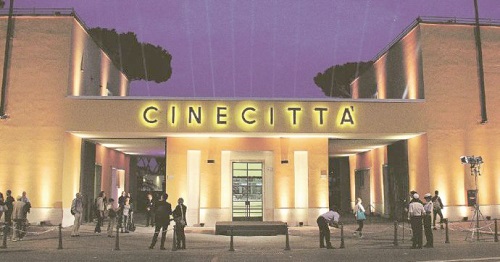
Europe, by contrast, views cinema not merely as a commercial industry, but as a vital piece of national heritage requiring robust public protection. Ultimately, Italy’s new agency reflects a healthy dose of self-awareness. It is an open admission that the old bureaucratic status quo was fundamentally broken, and it represents a proactive attempt to build a more streamlined version of itself.
Even though the framework remains explicitly rooted in a tradition of state reliance, it proves that local industry leaders are willing to restructure the system to preserve authentic local voices. However, if Italian lawmakers truly want a revolutionary reform, they should look beyond the borders of Europe and study how America operates.
Relying on state money, even through a specialized agency with strings attached, always keeps cinema on a lifeline tied to the government’s wallet.
By ignoring the American model of private equity and market-driven distribution, Italy misses a chance to build a self-sustaining industry that thrives on global audience demand rather than public subsidies.
True independence for Italian filmmakers might not come from a better public agency, but from learning how to cut the umbilical cord of state dependence entirely.

Massimo Volpe is a filmmaker and freelance writer from Toronto: he writes reviews of Italian films/content on Netflix