A Distinct Voice in Italian Cinema
TORONTO – The towering female figures of Italian cinema are without question Lina Wertmuller, Lina Cavani and Elvira Norati. Women whose films were brave, unconventional and provocative, from their bold political satires to controversial films exploring the depths of the human psyche. But Italy’s current leading female director – Alice Rohrwacher – despises the [gender based] distinction.
Born in Tuscany to a German father and Italian mother, Rohrwacher has risen to become one of Italy’s most prominent cinematic voices since winning the Grand Prix at Cannes for her film The Wonders (2014). But when asked about her stylistic approaches during a press cycle in 2023, the filmmaker made her stance clear.
“When a man makes a violent film, he’s a visionary. When a woman does it, she’s brave. If I make a film with a certain sensitivity, they say it’s a female gaze. But I just think of it as my gaze”. Behind Rohrwacher’s words are a string of accolades, ranging from the Nastro d’Argento for Best New Director to the Grand Prix and Best Screenplay awards, at Cannes. Not to mention her short film Le Pupille was nominated for an Oscar in 2022.
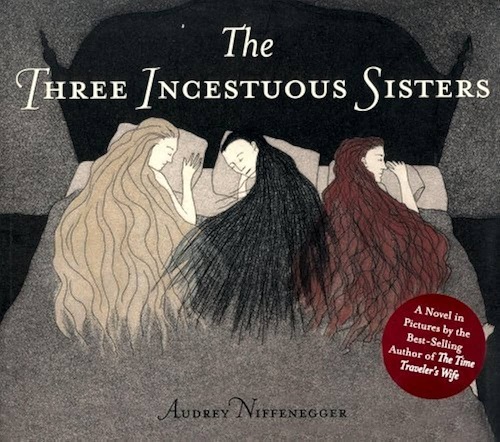
And she’s about to join a relatively small and select group of Italian female directors who ventured into English language filmmaking – forgive the gender distinction Alice. Her latest project Three Incestuous Sisters is an adaptation of Audrey Niffenegger’s gothic fairytale novel. It’s set to begin shooting on April 27th with a star-studded cast that includes Dakota Johnson, Saoirse Ronan, Jessie Buckley and Josh O’Connor.
The story centers on a “volatile sibling rivalry that erupts when one sister is consumed by jealousy over another’s love affair, spiraling into obsession and madness”. The film’s title might be off-putting but rest assured there is no actual incest the story. It’s meant as a metaphor for the sometimes-claustrophobic emotional intimacy of sisterhood.
The three sisters represent beauty, intellect and intuition, forming a psychological allegory for the internal self. It fits right into Rohrwacher’s wheelhouse of “magical realism”, a genre label that critics have attributed to her films.
Her protagonists (mostly female) tend to inhabit a space where the mythical and the mundane intersect. Whether rebellious or grounded, her female characters carry the full weight of Rohrwacher’s (female) gaze.
The director’s desire to be judged by her art rather than her female identity could one day materialize. But it’s simply not true that male directors are protected from this. Tony Scott’s Top Gun is cited for its “homoerotic male bonding” and “military machismo”. Zack Snyder’s 300 was criticized for having a “fetishistic male gaze”. Martin Scorsese’s Wolf of Wall Street was called “hyper-masculine bravado”. Just a few examples.
Rohrwacher: “I hope that more and more women will make films, because they have a very different way of storytelling”. Yes. But planting the gender flag while declaring art should be judged outside of that framework, is counterintuitive.
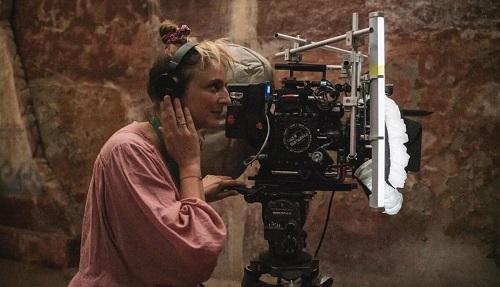
Image of Rohrwacher courtesy of Diana Donadon

Massimo Volpe is a filmmaker and freelance writer from Toronto: he writes reviews of Italian films/content on Netflix