The Italian Subsidy Trap
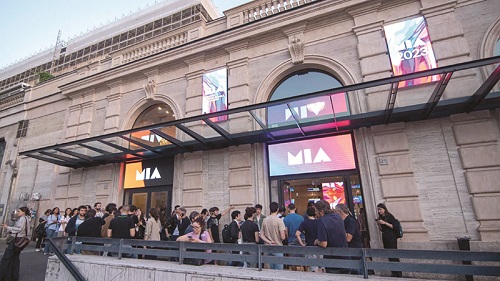
TORONTO – At the annual MIA Market in Rome this week, the Italian producers’ association (APA) released a bruising industry snapshot: investment in Italian film, TV, and streaming content has plummeted 7.4% to €2 billion, marking its lowest production spend in seven years. While industry representatives point to shifting viewership, the report explicitly highlights the true culprit: ongoing panic and systemic uncertainty surrounding state-controlled public funding and tax credits.
Today, Italy’s film industry largely operates inside a troubling subsidy trap. Rather than engineering sustainable business models backed by private equity and international pre-sales, independent filmmakers have grown entirely co-dependent on direct government grants from the Ministry of Culture.
The result is a “ghost industry” where hundreds of films are manufactured annually to trigger state payouts, playing briefly to empty theaters before vanishing. When the Meloni government tightened bureaucratic access to these tax credits this past year, the over-reliant industry simply ground to a halt. It proved that relying on government funding to survive instead of focusing on what audiences actually want is a recipe for business disaster.
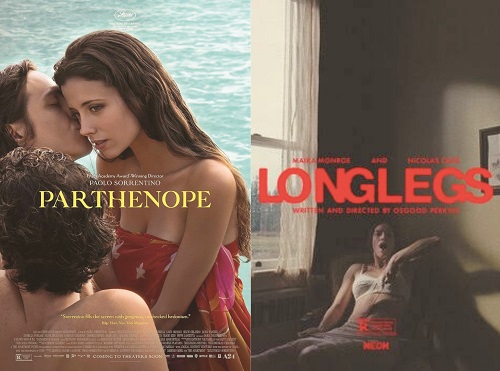
The actual damage caused by this broken economic model is perfectly illustrated when contrasting these two independent releases from 2024-2026: Paolo Sorrentino’s Parthenope (Italy) and Osgood Perkins’ Longlegs (USA).
For the un-initiated, Parthenope is a sweeping, visually opulent drama dedicated to the city of Naples that was treated as a major European cultural triumph. However, because Italy’s funding apparatus heavily weights prestige directors, the project bloated to a staggering €32.6 million budget, heavily insulated by Italian tax credits.
While culturally celebrated, Parthenope grossed just $11.7 million worldwide, leaving behind an approximate €20 million deficit unabsorbed by the free market. In any healthy commercial ecosystem, a loss of this magnitude would shatter a production house. Yet, because state cushions absorbed the blow, the producers faced no real financial downside, highlighting how public funding actively detaches filmmaking from economic reality.
Conversely, the American independent model operates on an entirely different axis of survival. Produced completely outside the Hollywood studio system, the psychological horror film Longlegs commanded a lean budget of under $10 million. Lacking any federal safety net, its filmmakers relied on private equity and aggressive territory pre-sales.
Because the survival of the production banner depended entirely on the audience showing up, market pressure forced extreme consumer innovation. The distributor, Neon, executed a viral digital marketing campaign that turned the movie into a global theatrical event, resulting in a historic $128 million worldwide box office.
The contrast is stark: Italy’s state-funded model often creates overpriced movies for empty rooms. Meanwhile, the American market forces independent filmmakers to stay creative and highly focused on winning over global audiences just to survive. If Italian cinema is to survive its current funding freeze, it must break its addiction to the state and realize that market risk is not the enemy of art, and can sometimes be its greatest catalyst.
Movie posters courtesy of A24 and Neon

Massimo Volpe is a filmmaker and freelance writer from Toronto: he writes reviews of Italian films/content on Netflix