Resurrecting Bertolucci
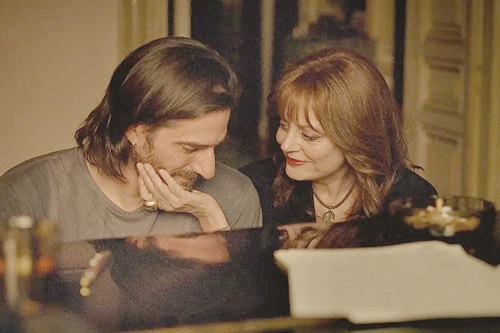
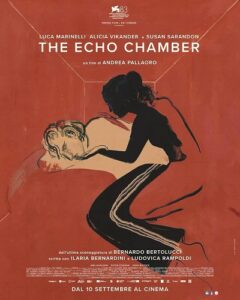
TORONTO – The closing credits of The Echo Chamber rolled at the 83rd Venice International Film Festival, and the Lido erupted into an emotional, eight-minute standing ovation mixed with audible tears. It was a grand, cinematic homecoming for the final, unfinished screenplay of the late Bernardo Bertolucci – a claustrophobic drama brought to life by director Andrea Pallaoro and a stellar cast featuring Alicia Vikander, Luca Marinelli, and Susan Sarandon.
Now playing in theatres, the film is proving to be exactly as polarizing as one would expect a Bertolucci film to be. While some critics laud its haunting, single-location intimacy, others recoil at its glacial pace and jarring third-act twist.
It is a cinematic event that reignites an enduring obsession within the art world: our insatiable collective desire to exhume, complete, and release the unfinished works of deceased masters.
Italy has a rich history of these posthumous resurrections. We saw it when Federico Fellini’s private notebooks were fed into artificial intelligence to manifest the collaborative short film Fellini Forward. We saw it when Sergio Citti transformed Pier Paolo Pasolini’s brutal, unproduced treatment into the 1996 film We Free Kings.
Even in the visual arts, foundations have occasionally taken Amedeo Modigliani’s verified structural sketches of elongated heads and chiseled them into full, physical limestone sculptures decades after his passing.
There is an undeniably romantic notion driving these projects – the belief that by completing the blueprint, we can temporarily conquer mortality and bring the artist back to life through their art. But it is also deeply presumptive.
The process of making art is a fluid, volatile act of constant revision. A script or a sketch left behind is merely a snapshot of a thought in progress, not a final decree. A director of Bertolucci’s meticulous nature might have changed it a hundred times over during production.
To be fair, The Echo Chamber is a unique case; Bertolucci had actively tried to realize the project with filmmakers before his death in 2018, granting the endeavor a legitimate blessing. Pallaoro’s direction is handled with immense care, avoiding the trap of exploitative imitation. The critique here is not directed at the filmmakers, but rather aimed at provoking thought about our relationship with authorship.
Consider Modigliani’s sketches. A line drawn on paper is a suggestion of form, but the physical act of chiseling stone requires thousands of microscopic, real-time creative choices. When another hand executes that work, whose art are we actually looking at?
Ultimately, an artist’s work is arguably best enjoyed when it is shaped entirely by their own hand. Without the master present to break, bend, and reinvent their own rules in the editing room or on the canvas, we are left with a beautiful echo. It may mimic the voice perfectly, but it never quite captures the breath.
Images courtesy of Rai Cinema & Indigo Film
Massimo Volpe is a filmmaker and freelance writer from Toronto: he writes reviews of Italian films/content on Netflix