Art Over Quotas: Debate Erupts at Venice

TORONTO – There is a fierce cultural battle playing out on the historic docks of the Venice Lido this year. It all started when six prominent Italian film bodies published a scathing open letter slamming the 2026 Venice Film Festival lineup. Their grievance: out of the twenty films selected for the prestigious main competition, only a single title was directed by a woman.
The protest frames this single digit as a massive institutional failure, accusing festival director Alberto Barbera of locking women out. But looking closely at the festival’s recent history reveals a much more fluctuating narrative than a simple story of exclusion.
Over the last five years, Venice actually maintained a fairly steady track record. In 2022 and 2023, the festival hovered around a stable twenty-two percent female representation. By 2024 and 2025, that number climbed even higher, peaking at nearly thirty percent with six women competing for the top prizes.
This year’s sharp drop to five percent is certainly a sudden shift, but treating it as a deliberate step backward ignores how unpredictable creative pipelines can be. The open letter targets Barbera’s defense of “objective quality,” claiming that artistic merit is never truly neutral.
Yet, the authors of the letter fail to see that their own critique is just as deeply subjective as the curation they are attacking. When a guild claims a lineup is “skewed male,” they aren’t presenting a provable factual error. They are expressing an industry frustration over visibility. Art simply cannot be measured on a mathematical balance sheet.
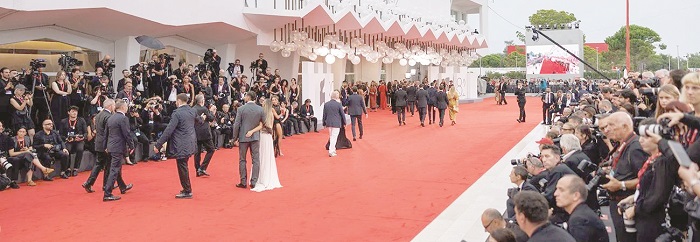
There is also a quiet cruelty in the letter’s rhetoric regarding the filmmakers who actually made the cut. To suggest that these chosen films are merely “mediocre” male-directed projects implies they only secured their slots through a patriarchal safety net.
This assumption carries an inherent sexism of its own. It completely dismisses a male artist’s intense labor, vision, and talent, reducing their creative triumph to a byproduct of a “boys’ club”.
Curators are human, and they will always gravitate toward stories and aesthetics that resonate with their personal sensibilities. If a female curator were running the festival, she would naturally select films that speak to her unique worldview, inevitably skewing the lineup toward female voices.
Were the tables turned and a female curator assembled a heavily female lineup, any claim by male filmmakers that those women were only chosen because of their gender would be rightly condemned. The resulting public outcry would be deafening and immediate.
Ultimately, Venice is a celebration of artistic taste, not a corporate office bound by demographic quotas. Demanding that subjectivity only bend in one direction doesn’t create equality—it just changes who holds the keys to the gate.

Massimo Volpe is a filmmaker and freelance writer from Toronto: he writes reviews of Italian films/content on Netflix