Portrait of an Italian Physicist, Gianotti
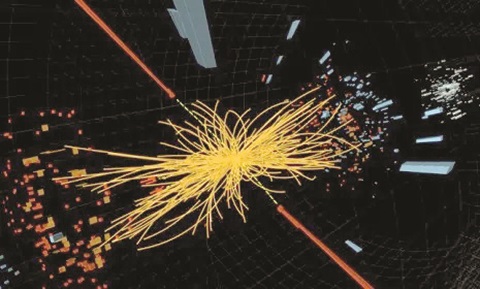
TORONTO – While the Italian film industry wrestles with bureaucratic funding standstills, Stefano Mordini has set his sights on telling the story of a historic female physicist. His upcoming film, The Mysterious Particle (La particella misteriosa), tackles the life of world-famous physicist Fabiola Gianotti, charting the high-stakes countdown to her historic 2012 announcement of a breakthrough that changed our understanding of the universe.
Gianotti’s breakthrough proved the existence of the subatomic puzzle piece that explains why anything in our universe physically exists at all. Without this particle, the basic building blocks of nature would have no weight. They would simply zip through empty space at the speed of light without ever coming together. By confirming its existence, her team unlocked the exact mechanism that allowed matter to clump together after the Big Bang.
But Mordini isn’t just making a clinical workspace drama. He is aiming for a sweeping psychological portrait. The script, co-authored by Mordini, Luca Infascelli, and novelist Paolo Giordano, deliberately zeroes in on the poetic friction of Gianotti’s inner world. Long before she was navigating the massive underground laboratories of Geneva, she was a classically trained pianist and an aspiring prima ballerina.
The film will explore how a deep-seated love for philosophy and music can also lead a person to decode the deepest mysteries of nature. Gianotti’s journey proves that logic isn’t always cold, but can be driven by the imagination. In a global culture increasingly content with the superficial, there’s something deeply refreshing about a film that dares to treat Gianotti’s intellectual obsession as a grand cinematic spectacle.
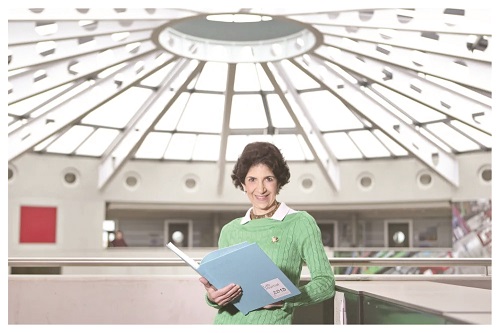
Moreover, The Mysterious Particle will certainly be presented as a celebration of an incredible Italian triumph on the global stage. When Gianotti led her international team of 3000 scientists to this massive breakthrough (via the Atlas Experiment), she wasn’t just managing data, she was leading humanity into a brand-new era of knowledge.
To see an Italian production company push this distinct female legacy into the international market highlights a crucial counter-narrative to current domestic anxieties. It shows that Italian films can still grab the world’s attention, shifting away from predictable local clichés to focus on a powerful global figure.
Still, the filmmakers are focused on her human side, promising a bold story that balances the laboratory with her personal inner life, or “the human poetry hidden beneath the equations”. Mordini and his co-writers will strive to show how “artistic intuition and scientific discovery stem from the exact same human longing”.
Whether Mordini can seamlessly translate Gianotti’s invisible, internal drive into visually arresting cinema remains to be seen. If the director can successfully balance her artistic soul with her historic weight, The Mysterious Particle will do more than just honor a monumental legacy. It will remind the world that Italian cinema can still look up at a singular human life and find something truly profound.
Image of Fabiola Gianotti courtesy of Fremantle; image of the God Particle courtesy of CERN, Thomas McCauley, Lucas Taylor

Massimo Volpe is a filmmaker and freelance writer from Toronto: he writes reviews of Italian films/content on Netflix