Quiet Resilience, Loud Voice

TORONTO – While the insipid Hollywood practice of remaking foreign movies to capitalize on international success stories continues, the formula is also being used abroad – including in Italy. The difference however, is that Americans pump out more flops from the formula than hits, primarily because Hollywood studios tend to make safe and digestible remakes for local audiences. A process that is colloquially referred to as sucking the soul from the art.
But the latest Italian release on Netflix, Feel My Voice, addresses the traps that typically spoil remakes. The coming-of-age drama follows Eletta (Sarah Toscano), the only hearing member of a deaf family. The shy teen discovers her gift for singing, forcing her to choose between duty to her family and finding her own path.
The plot will of course sound familiar to fans of CODA (2021), a surprising American remake that warmed Academy hearts, winning the Oscar for Best Picture, Screenplay and Supporting Actor. CODA followed a family whose fishing business is threatened, and whose daughter found herself torn between pursuing her love of music and her fear of abandoning her parents.
Despite being remakes, CODA and Feel My Voice approached the source material – a 2014 French film La Famille Bélier – in a manner that film masters like Hitchcock and Godard would have likely approved. Hitchcock believed that remakes could be creative do-overs, an opportunity to address creative limitations of the past. He did so himself with The Man Who Knew Too Much, starring James Stewart.
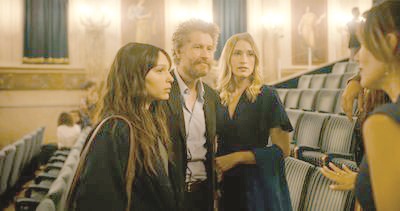
The French new wave director Godard on the other hand, despised the practice for himself. He did however repurpose ideas from other classics and held the firm belief that, “It’s not where you take things from—it’s where you take them to”. Feel My Voice’s director Luca Ribuoli certainly interpreted the story through an Italian lens, while honouring the French source material.
The director emphasized that his primary mission for the film was, “to tell the truth and provide authentic representation”. Part of that vision included setting the family’s business on an agrarian farm for donkey breeding and donkey milk production. Because in Italian culture the donkey is historically a symbol of quiet resilience – a nod to Eletta who exhaustingly balances her singing aspirations while serving as her family’s bridge to the hearing public. Especially as her father Alessandro (Emilio Insolera) launches a local mayoral campaign.
Ribuoli’s commitment to authentic representation also extended to his casting, which sees real deaf actors like Emilio and Carola Insolera as the parents, and pairing them with Italian singing sensation Sarah Toscano. Mirroring her character’s musical ambitions, Toscano was herself an aspiring talent contestant on Italy’s premier reality television competition Amici di Maria De Filippi – which she won. The cast’s raw, lived-in reality elevates what could have been a needless remake into a fresh interpretation.
Images courtesy of Netflix
Massimo Volpe is a filmmaker and freelance writer from Toronto: he writes reviews of Italian films/content on Netflix