Digging Up Bertolucci’s Cinema
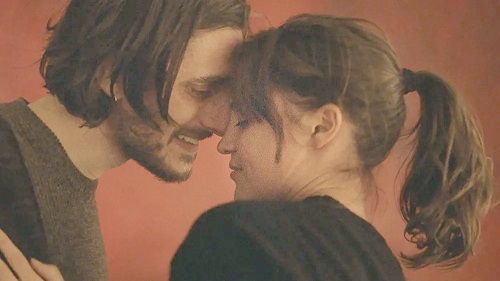
TORONTO – Italian films may not have been screening at Cannes last week, but some were boarding its Film Market looking to launch international sales. One of them was Bernardo Bertolucci’s final posthumous film The Echo Chamber (starring Alicia Vikander, Luca Marinelli and Susan Sarandon). The legendary auteur – who passed in 2018 – wrote the story and first draft before bringing on two prominent Italian screenwriters: Ilaria Bernardini and Ludovica Rampoldi.
Bound to his wheelchair at the time, the director enlisted help to develop a minimalistic, intense psychological drama that he wanted to direct. His pitch: “One man. One woman. One house. The man we only see at night. The woman only during the day”. A familiar formula. One the director practically used for two of his other sexually-charged and confined stories: Last Tango in Paris (1972) and The Dreamers (2003). And although one of them belongs to this century, it sadly feels part of a bygone era. Roger Ebert famously characterized The Dreamers as a “provocative and visually voluptuous” film that challenged “the puritanical censorship of modern cinema”. He was calling cinema puritanical in 2003. Where does that leave the 2026 culture that’s terrified of genuine aesthetic or moral offense?
Pauline Kael of the New Yorker, one of the most influential voices in the history of American film criticism, described Bertolucci’s Last Tango in Paris as “possibly the most powerfully erotic movie ever made” and a “breakthrough” that “altered the face of an art form”. Her famous review for the film came out months before the theatrical release, and set industry abuzz in anticipation.
Now, we have to exhume Bertolucci’s scripts to try and immerse ourselves in that kind of rich evocative storytelling. It only highlights the deficit in today’s film landscape and language, that we have to dig up a dead man’s ideas (God rest his soul) for boundary-pushing drama.
Nonetheless, the project’s producers at Indigo Film assure us that The Echo Chamber’s director Andrea Pallaoro has “made the film his own, interpreting it through the lens of his personal artistic vision and sensibility”. The film’s Sales Executive Jeanne Loriotti (Paradise City Sales) says the film shows that Pallaoro is reaching “a new level of maturity, crafting a film that is both formally striking and profoundly moving”.
Sales pitch or not, Pallaoro is known as an intimate low-budget indie auteur. His slow burn character studies (Medeas, Hannah, Monica) earned him the arthouse prestige and critical acclaim that would likely have excited Bertolucci. Pallaoro can potentially take a page from Denis Villeneuve’s reworking of Ridley Scott’s masterpiece Blade Runner (1982).
Villeneuve was a mid-career auteur known for cerebral filmmaking when he was tasked with re-envisioning the classic. Some critics even argued his remake surpassed the original. We’ll see if the same waits for Pallaoro – should it become a front runner at this year’s Venice Film Festival.
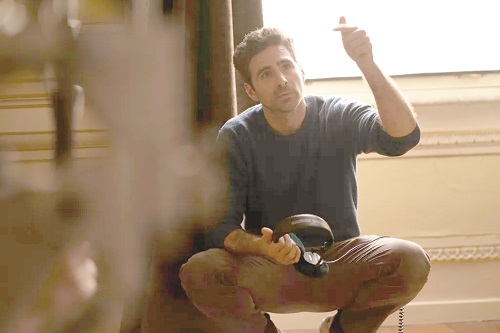
Image of The Echo Chamber courtesy of Indigo Film; image of Andrea Pallaoro courtesy of Beniamino Barrese
Massimo Volpe is a filmmaker and freelance writer from Toronto: he writes reviews of Italian films/content on Netflix