Blacklisted in Hollywood, Backed in Rome
TORONTO – American film auteurs tend to overstay their welcome in the Hollywood system, where the “blockbuster” trumps contemplative cinema. Think Woody Allen, whose more recent films are multi-city coproductions anchored in Europe. Or Orson Welles who used an AFI award speech to appeal for finances – before securing them in Spain. Francis Ford Coppola even turned to his wine company to fund films in Romania, Argentina and Spain.
And the next American titan to become persona non grata in America…is Oliver Stone. After making some “problematic” documentaries over the last ten years, the three-time Oscar winning Director is virtually unemployable. However, Italy’s leading independent Distributor Eagle Pictures, helmed by Tarak Ben Ammar, is taking on Stone’s new narrative film White Lies.
Stone will shoot for 36 days in Rome and 12 more in Abruzzo, employing 122 crew members throughout. “After nearly 10 years away from features, I feel like I’m starting again, as when I made Platoon and Salvador in 1986. White Lies will find its natural home, because it’s an eternal story of love”.
The film stars Josh Hartnett, a man in a midlife crisis who in the process of escaping his past, has a transformative encounter in Italy with a mysterious woman. Some indie filmmakers in Italy might bemoan the production for being another “postcard-Italy film” made by an American, but it meets most of the cultural requirements: set in Italy, employs Italians and will likely cast an Italian co-star who speaks the local language.
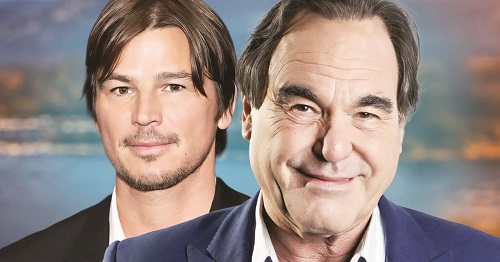
Eagle Pictures is of course prioritizing Stone’s artistic legacy and marketability over his political leanings. This is easier to achieve with a fictional story about love and romance. But that’s a key pivot for the American filmmaker after having been “blacklisted” [according to Stone] by Hollywood’s left-leaning establishment.
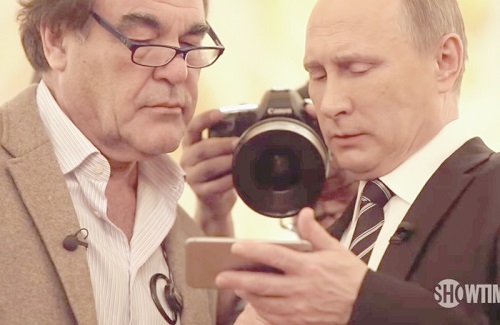
Stone’s 2017 documentary, The Putin Interviews, was the bone of contention. “I have been blacklisted from Hollywood because of my documentary about Vladimir Putin. The doors have closed in my face in America”. Stone’s critics, like The New York Times and Washington Post, feel that the director was too sympathetic to Putin during his 20 hours of unprecedented access to the Russian President.
Oliver Stone’s film is being announced during a particularly tense period in Italian cinema, with artists decrying that the state is only funding “heroic” depictions of Italy in favour of creative truth telling. The project however, could be a template on how to leverage several financial and logistical streams to fund a film.
While it’s not advantageous for the state to supress creative or even counter-culture voices – as art is meant to push boundaries – every artist isn’t entitled to tax payer dollars. Especially if they’re actively working against state interests. An obvious paradox.
Perhaps the answer is to bridge the gap between hyper-local storytelling and universal themes. That’s how the funding paradox disappeared for filmmakers like Fellini, Sorrentino and Tornatore – whose disruptive films managed to make the world fall in love with Italy.
Image of Stone & Putin courtesy of Showtime
Massimo Volpe is a filmmaker and freelance writer from Toronto: he writes reviews of Italian films/content on Netflix