Italian Dramedy Confronts Our Differences

TORONTO – Daniele Luchetti’s Noi un po’ meglio is coming to Netflix, a romantic comedy addressing the need for couples to make small compromises. Today’s ferociously polarized climate has turned the simple mindset of finding common ground into a movie plot. Sad, but the reality according to a 2025 report (by the American Enterprise Institute) is that 73% of college-educated single women in the U.S. are less likely to date someone with opposing political views. And Italy is trending in that direction.
The philosophically divided couple in the film are Simone (Elio Germano) and Lucia (Maria Chiara Giannetta). He’s a traditionalist, and she’s a fiercely independent woman. A fatal attraction on paper, as the two are fundamentally incompatible. But when has a romance ever been forged through intense forethought.
“I wanted to recount the path of a couple that decides to adopt a child, looking at it as an intimate investigation into their vulnerabilities. It is a story of continuous, minuscule, and fun negotiation. The title reflects the idea that through this process—this confrontation with our own fears and differences—we might actually become, in the end, a little better”, says Luchetti.
The director sees his protagonists as representing two Italys, or two cultural mindsets within Italy. Simone being the traditionalist who seeks stability, and Lucia the nonconformist who “fears the loss of independence”, asserts Luchetti. It’s essentially a microcosm of a country that’s seeing more of its female population becoming increasingly averse to patriarchal views and conservative moral values.
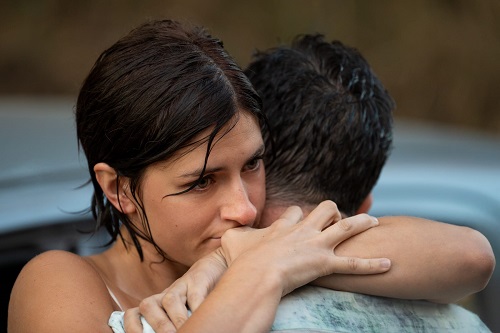
And yet, Italy elected its first ever woman Prime Minister just four years ago. To boot, Giorgia Meloni’s campaign slogan was “God, Fatherland and Family”. Naturally, left-leaning media and voters labelled her a “Neo-Fascist” and a “Threat to Italian Democracy”, among other niceties. This is the climate within which films like Luchetti’s Noi un po’ meglio are being made.
There’s a good chance that decades from now audiences might watch these early 21st century movies, and wonder why the men had to convince women that growing a family was a good thing.
What they might discover is that for some [during this era], the traditional nuclear family reeked of an idealism too closely tied to fascistic propaganda. And propaganda is what filmmakers like Daniele Luchetti wish to avoid.
“I don’t want to show a Rome that is just monuments and sunsets. I want to show the Rome where people actually struggle to park their cars and decide their futures …The postcard is the death of cinema because it asks the viewer to admire a landscape instead of feeling a life. When we look at our cities through a lens that is too clean, we lose the dirt under the fingernails of our characters”.
Luchetti’s sentiments could be taken straight from the Neorealist handbook, authored by masters like Rossellini and De Sica. The difference between Luchetti and his mentors however, was that their approach to gritty filmmaking wasn’t necessarily a stylistic choice, but the result of working in a truly devastated economy.
Images courtesy of Netflix

Massimo Volpe is a filmmaker and freelance writer from Toronto: he writes reviews of Italian films/content on Netflix