Remembrance Unites What History Divided
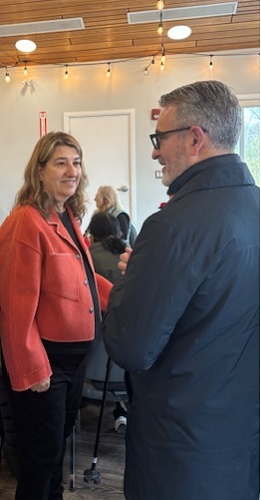
TORONTO – Occasionally, not often enough unfortunately, political figures shed the cover of partisan position to convey a human side that transcends the harsh realities of the moment to reveal an empathetic side, a civility that energizes our society. Minister Paul Calandra did precisely that at a pre- November 11, Remembrance Day ceremony in Whitechurch-Stouffville on Saturday.
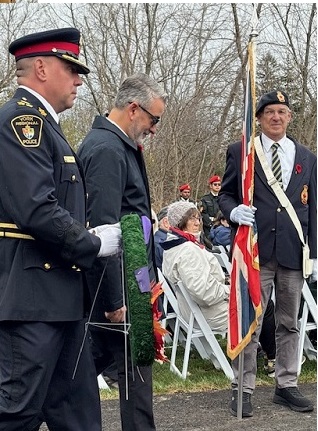
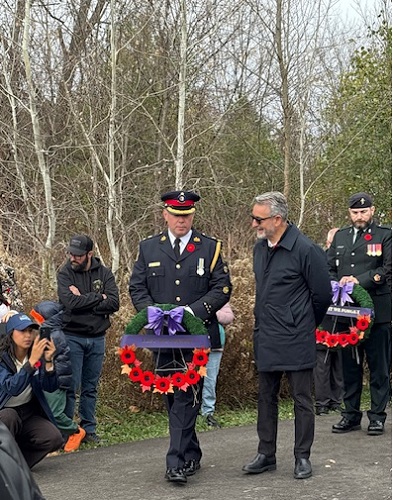
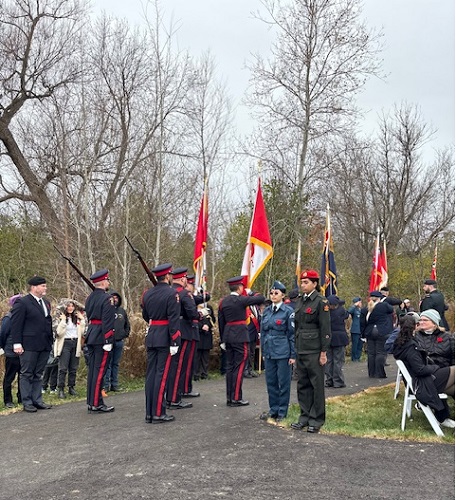
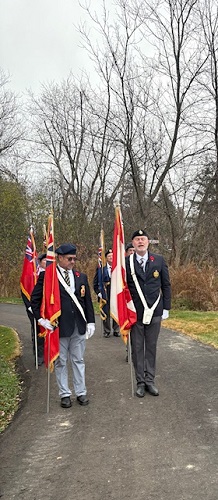
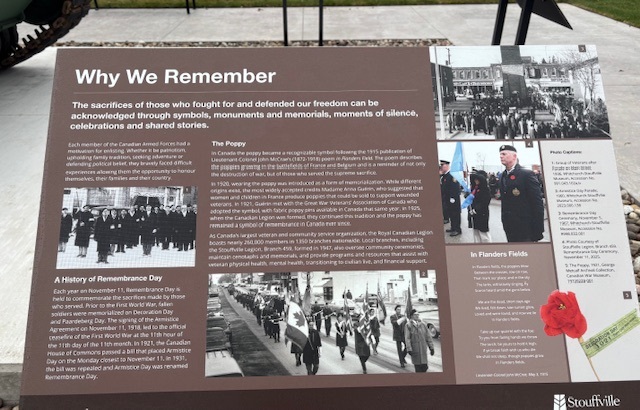
Like all Remembrance Day ceremonies, the formalities – the march to the cenotaph or “monument”, the laying of the wreaths, the orations in recognition of a sacrifices made, overcome or not, the last trumpeter – were designed to evoke emotional connection to a regrettable [some acknowledge a necessary] decision to engage in war.
The “host of the event”, the curator of the Whitechurch-Stouffville Museum ensured that the protocols for the occasion had been meticulously observed to ensure the dignity and deference to the fallen. That these ceremonies continue to be an important part of the “New Canada” is a marvel in itself. Canada as we know it, was not Canada of 1940, either geographically, politically or culturally. The population was divided along British and French linguistic lines; the Aboriginal communities and Ethnocultural were literally a second thought. “Patriotism” was interpreted as loyalty to “the motherland” – Britain, not Canada, not France, not… Conscription, forced military service, became the issue of the day.
Today’s political class has succeeded at least in recognizing that the [young] men of the era toiled for what we have today. In all honesty, probably for what we today say motivated them. Those young men and their families (mothers, wives, girlfriends, daughters) earned the right to the respect due them.
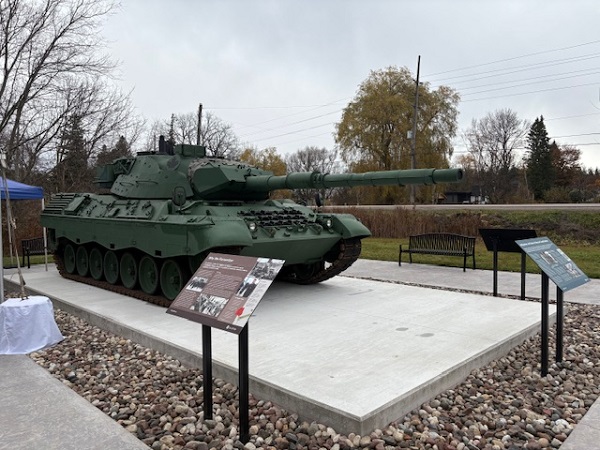
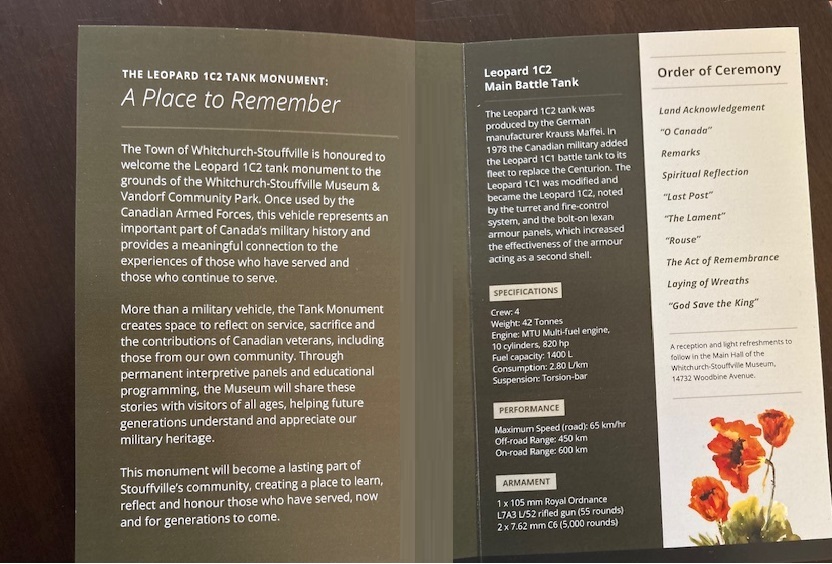
Minister Calandra offered homage to those whose ultimate sacrifice preceded the ceremonials recognizing the fulfillment of their glorious ambition. He is a product of a population stigmatized, in law, by the acrimonious appellation of era as Enemy Aliens. In what must have appeared as ironic, he gifted a rebuilt tank – the Leopard 1C2. Lightheartedly suggesting that if the museum had not accepted, he might have had to put on his front lawn and risk having his wife divorce him.
We are glad that she will not need to make that sacrifice and that Canada has accepted the “gift” – now a public ornament, from the son of a survivor of the trials and tribulations of war… in Canada.
Here below is a photogallery from the ceremony (photos: Corriere Canadese)