Italy’s “Cinema Revolution”
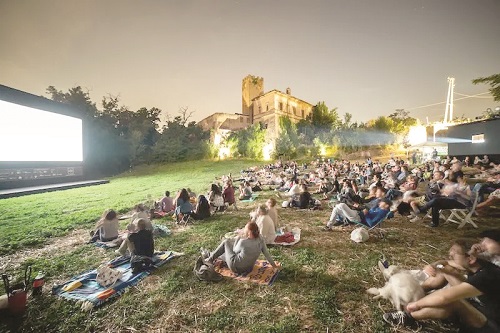
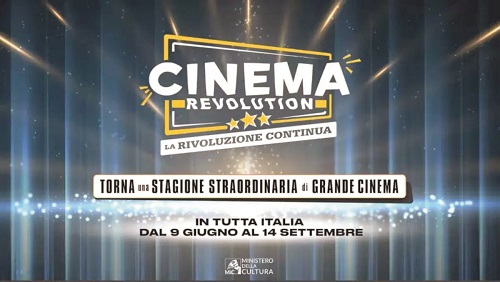
TORONTO – Italy is now entering its fourth year of nationwide summer movie discounts, aptly named “Cinema Revolution – Che Spettacolo”. The summer program/campaign had its inaugural year in 2023, initiated by the Ministry of Culture. The idea was to bring people back to the theatres post pandemic, by lowering the cost of summer movie tickets. From mid-June to mid-September screenings ran for no more than €3.50 across the board (domestic and foreign/Hollywood films). It was backed by a €20 million state fund which helped to support theatres and community spaces, as well as local artists.
This year however, the Summer Revolution has shifted slightly – or drastically, according to many in the film industry. This year, American films are excluded from the €3.50 price drop, except for one weekend before June 19th. From then on until September, the usual three-month “Spettacolo” limits the subsidy to domestic and European Union-produced titles.
This would normally be viewed as a significant investment in the local film scene, but the arthouse crowd has raised its collective voice in protest. The criticism: by stripping the promo from American blockbusters, the government is putting on a fake show to protect local movies. Italian indie artists believe that this will crush creative, artistic films – what they call “auteur cinema”.
While there does seem to be a valid concern over how exhibitors will prioritize their screenings, independent filmmakers can’t have it both ways. For years, local artists have contended that the state does little to support grassroots cinema. But a program like Cinema Revolution is built specifically to incentivize and prioritize local talent, forcing audiences to actually support Italian stories.
The Ministry is also receiving pushback from exhibitors whose criticisms rely heavily on a web of assumptions, treating theatregoers like predictable robots who only turn up for cookie cutter commercial products. They argue that multiplexes will crowd out intellectual cinema in favor of raw summer volume to cover overhead. But the problem isn’t just the ticket price or the multiplex scheduling.
Maybe some arthouse films just aren’t good. Expecting people to watch a movie just because it is called “art” is the reason local comedies thrive.
Maybe the answer is not to vilify a program designed to bolster domestic art, but for auteur filmmakers to create movies that actually inspire a mass audience.
Take Paola Cortellesi’s There’s Still Tomorrow, a black-and-white postwar drama that defied every commercial assumption to become a historic box office champion.
More recently, The Boy with the Pink Pants took over Italian theaters and public discourse. On paper, an intimate, heavy teen drama exploring the tragic reality of cyberbullying should have been an algorithmic flop. Instead, it grossed over €10 million, conquering audiences en masse.
When local art refuses to perform just for tourists and instead strikes a deep emotional chord, audiences will show up, whether the ticket costs €3.50 or full price. There’s just one problem with the industry’s complaints: inserting grievance doesn’t mask an obvious lack of audience connection.
Image of outdoor cinema courtesy of I ragazzi del Cinema America / Facebook

Massimo Volpe is a filmmaker and freelance writer from Toronto: he writes reviews of Italian films/content on Netflix