Filmmakers Protest the Donatello Awards

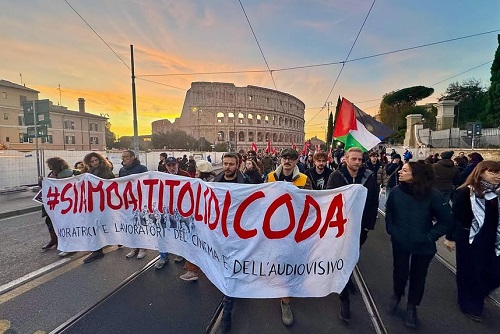
TORONTO – True to its nature of being a country of peaks and valleys, Italy is at it again. The Italian Oscars – the 71st David di Donatello awards – will take place on May 6. That is of course if the #Siamoaititolidicoda (We are at the end credits) movement doesn’t have its way. The protest group is representing the film industry’s workforce, of which nearly 60% are currently unemployed. The nation’s alarmists have officially united.
The protests began when the Ministry of Culture announced budget cuts to its film grant program in October of last year. Many industry professionals believe that Italy’s movie industry is in the middle of a deep-seated financial crisis, rooted in €150 million being slashed from the film fund. Not to mention the tax credit freeze since the reforms.
Italy’s 40% tax rebate is among the very highest in the world, but many in the industry feel that Meloni’s recent tax reforms have transformed Italy into a “service centre” for Hollywood.
The overarching concern is that Italy is becoming a backdrop for American productions and undercutting the country’s unique cinematic voice.
Canadian filmmakers will find this a familiar story. Only Canada’s tax rebate is significantly lower (25%). Worse is the hyper selective granting process, which gatekeeps funds on a “merit” based system – but feels more like a lottery.
A-List actor Sergio Castellitto spoke out recently about the prospect of cancelling the Donatello ceremony: “We should dismantle the David di Donatello congregation and then talk about it again…I know nothing about [the boycott] and I’m quite uninterested”.
Others like director Marco Manetti (Diabolik) inferred something more sinister, connecting the film reforms to government censorship. “What would happen if you make a movie against the government? It’s complicated…we should learn to rely on the state a little bit less”, said Manetti. But protestors are viewing the new restrictions as an excuse to defund politically challenging cinema.
Still, the Donatellos are often a platform to showcase such films. This year’s Best Picture darling (16 nominations) is The Last One For The Road, a gritty dark comedy that follows two functioning alcoholics on a road trip through Veneto’s dive bars. While having procured some private funding, the film was mostly financed through local and national cultural funds (Veneto Region) – and European film boards.
What then is the truth: is it a “total collapse” or a “fiscal restructuring”. While there was in explosion of projects in Italy after the state doubled its funding from €400M in 2019 to €800M in 2022, the vast majority of those films earned zero audience. Even recently government officials have pointed to 20 state funded films that earned less than €2,000 each at the box office.
Despite the partisan grudge that some Italian filmmakers might have with Meloni’s government, labour and funding is the core issue.
Funding that in many ways far exceeds what’s available in Canada. Because while Italians are mourning a lost feast, Canadians are still scavenging for crumbs. Perspective.

Massimo Volpe is a filmmaker and freelance writer from Toronto: he writes reviews of Italian films/content on Netflix