Don Quixote Returns to Italy
TORONTO – “Don Quixote could very well be considered the first modern novel, in so much as it introduced psychological realism to its protagonist – in this case a deluded Spanish nobleman. Alonso Quixano was a man so enraptured by romantic tales of chivalry he reinvented himself as “Don Quixote”, a knight-errant who set out to perform brave deeds. De Cervantes’ masterful blend of romanticism and satire has been a muse for artists worldwide, and not least for Italians.
Fabio Segatori, Italian director of the upcoming Don Quixote, echoes the sentiment: “Who has never felt like a foolish idealist in a world governed by greed and oppression?” Adding, “Don Quixote is surrounded by a desert, a Middle Age that never ends. The knight urges men to be free, but in the end, he realizes that freedom is a new experiment. And we are not yet accustomed to it”.
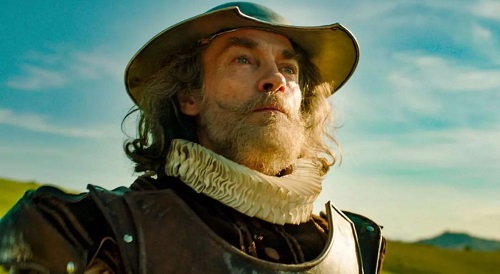
Segatori’s film, starring Alessio Boni (as Don Quixote) and Fiorenzo Mattu (as Sancho), will reach theatres on March 26th. Primarily shot in Basilicata and Calabria, the film’s prologue and epilogue are set in Sicily at the site of a deconsecrated church from the 17th century.
Serving as a civic hospital, this church was where the Don Quixote writer Miguel de Cervantes was hospitalized during the battle of Lepanto.
The author spent considerable time in Palermo, Trapani and Messina as a soldier during Spain’s Golden Age – when Sicily was under Spanish rule. His experiences on the Italian island left an indelible mark on the author, who would then incorporate Italianate landscapes and references to Spanish Viceroys in Sicily throughout the famous novel.
But this isn’t the first time a screen adaptation has been attempted by an Italian. Sergio Leone – the legendary filmmaker of The Good, The Bad and The Ugly – mused about making a contemporary adaptation of Don Quixote for decades.
“The important thing is to make a different world…a world that allows myth to live. The myth is everything”, said Leone, speaking about his core fascination with the project. He never did make the film but had always intended to cast Clint Eastwood, who according to Leone, brandished the type of stoicism that would perfectly contrast the character’s internal delusion.
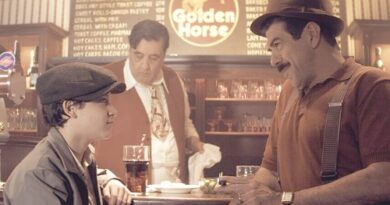
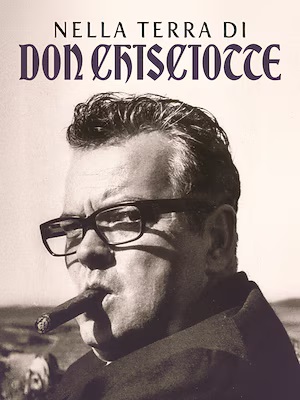
Even the legendary Orson Welles (Citizen Kane) yearned to adapt Don Quixote to screen, employing Italian Editor Mauro Bonanni as his key collaborator.
Bonanni famously held the unfinished film’s original negatives (12 hours of footage) for more than 40 years. And while Welles’ Quixote pipedream never materialized, he did direct and produce a 9-part documentary “In the Land of Don Quixote” for RAI, which aired in Italy in 1964.
The Italian connection to this Spanish tale is certainly rooted in the authors’ adventures in Sicily. Yet the novel’s satirical undertones may be the true lure for a people whose ancestors famously declared “satura tota nostra est” (satire is entirely ours). Interestingly, the Roman rhetorician (Quintilian) who first made the claim, was born in Hispania.
Image of Alessio Boni as Don Quixote courtesy of Baby Films; image of Orson Welles Rai Documentary courtesy of RAI
Massimo Volpe is a filmmaker and freelance writer from Toronto: he writes reviews of Italian films/content on Netflix