Aging the Italian Way
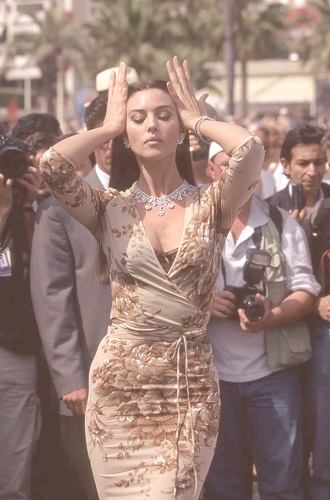
TORONTO – As Monica Bellucci celebrated her 62nd birthday this week, the milestone serves as less of a reminder of time passing and more of a celebration of a uniquely Italian philosophy. In an international film industry often paralyzed by the frantic chase for eternal youth, Bellucci stands as a monument to natural elegance.
Her refusal to freeze her features or bow to plastic surgery is not merely a personal lifestyle choice. It is the continuation of a centuries-old lineage of Italian women who have weaponized their maturity as a form of cultural and moral authority.
This refusal to conform to a youthful ideal, stretches back to the very foundation of Rome. Livia Drusilla, the powerful wife of Emperor Augustus, radically rejected the decadent, heavily painted cosmetics favored by the elite of her era. In her official public portraits, Livia demanded to be depicted not as an ageless, flawless deity, but with the natural features of a traditional Roman matriarch.
For Livia, an un-sculpted face signaled wisdom, stability, and dignity. Centuries later, during the Italian Renaissance, a similar resistance emerged through the concept of Sprezzatura – an artful, effortless nonchalance. While the era heavily promoted rigid, artificial beauty standards, a powerful counter-movement of several high-society Italian women championed natural aging and intellect.
When Italian cinema captured the global imagination in the 20th century, this philosophy found its fiercest vocal defenders. The legendary Anna Magnani, the poster-girl for Italian Neorealism, famously commanded her makeup artists, “Leave me all my wrinkles, don’t hide a single one. It took me a lifetime to earn them!”.
Decades later, Isabella Rossellini echoed this defiance after navigating the hyper-critical worlds of high fashion and Hollywood, declaring, “I prefer to look like an old woman rather than a woman who has had plastic surgery and looks like a monster. It doesn’t look younger; it just looks like surgery”.

Bellucci sits comfortably alongside these titans, as she deliberately dismantled the “just a pretty face” label through a series of uncompromising arthouse cinema choices. She famously said: “To give substance, weight, and truth to a character with a level of inner turmoil, you have to have lived. You have to accumulate scars and experience”.
This artistic weight allowed her to shatter Hollywood conventions entirely when, at age 50, she defied traditional “Bond girl” requirements in Spectre, reframing the archetype not as a fleeting object of youth, but as a mature, commanding woman of substance.
Ultimately, Bellucci’s approach to aging is reflective of a sentiment found all across Italy. From Sicily to Milan, Italian women have long understood that beauty is an internal architecture. By letting their souls, their laughter, and their lived experiences navigate the aging process rather than relying on artificial products, they remain timeless.
At 62, Monica Bellucci remains the ultimate ambassador of this truth, proving that a face shaped by life is infinitely more captivating than one frozen through surgery.
Images courtesy of Lia Toby and Patrick Aventurier

Massimo Volpe is a filmmaker and freelance writer from Toronto: he writes reviews of Italian films/content on Netflix