Italians Behind Major Oscar Contender
TORONTO – The history of international cinema is arguably anchored by a select group of visionary Italian producers who refused to let language or geographic borders constrain their artistic scope. Moguls whose financed projects were sweeping, ambitious, and operatic, from era-defining blockbusters to intense psychological character pieces.
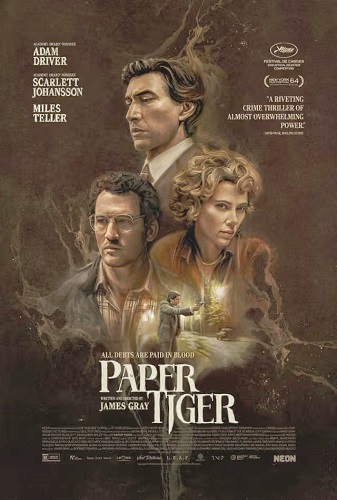
James Gray’s highly anticipated Paper Tiger is merely the latest chapter in this deep-rooted national legacy. The crime drama is a major talking point of the industry right now, having just celebrated its highly anticipated North American premiere as the Opening Night selection of the New York Film Festival – ahead of its scheduled theatrical release on November 20, 2026.
To understand why Italian producers excel at packaging English-language cinema, one must look at the 20th-century titans who established the blueprint. Dino De Laurentiis transitioned from neo-realist roots to shape American grit with Sidney Lumet’s Serpico (1973) and David Lynch’s surreal Blue Velvet (1986).
Carlo Ponti lent his prestige to David Lean’s sweeping Doctor Zhivago (1965) and Michelangelo Antonioni’s Blow-Up (1966). Meanwhile, Alberto Grimaldi financed the raw New York underbelly of Midnight Cowboy (1969) before eventually backing Martin Scorsese’s Gangs of New York (2002).
Even the auteur driven Franco Cristaldi found massive global success by backing the English-language medieval mystery The Name of the Rose (1986). By treating the producer as a creative co-author, Italian film figures traditionally shielded the director’s artistic vision while seamlessly packaging it with Hollywood’s commercial muscle.
Driven by domestic market limitations to master international co-production funding, they naturally inject standard English genre tropes with a visually rich, operatic intensity – a trademark of their cultural DNA. These Italian producers did not just fund films, they married European artistic sensibilities with the commercial demands of Hollywood.
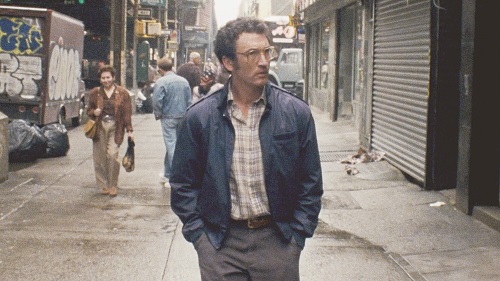
Paper Tiger fits snugly into this tradition. The film centers on two brothers pursuing the American Dream in mid-1980s New York who get dangerously tangled up with the Russian mafia syndicate operating along the Brooklyn waterfront. It is a story of ambition, family friction, and institutional corruption, unfolding against a criminal vacuum left behind by the fading Italian mob.
The film is championed by the prominent Leone Film Group, alongside the creative backing of artist and producer Marco Perego. Director James Gray has been vocal about his creative influences, openly stating during production that Italian cinema from 1945 to 1980 is “everything to me,” serving as the structural blueprint for how he crafts cinematic tension.
On that point, Christopher Spelman’s musical score is heavily inspired by the late-Romantic operas of Giacomo Puccini. By blending American genre tropes with the emotional weight of classical Italian melodrama, the producers have achieved what their mid-century predecessors always did.
As Paper Tiger moves from its triumphant Lincoln Center premiere to a wide theatrical rollout this November, it stands as a brilliant continuation of an Italian producing lineage that continues to impact Hollywood and international cinema.
Images courtesy of Leone Film Group and Neon

Massimo Volpe is a filmmaker and freelance writer from Toronto: he writes reviews of Italian films/content on Netflix