The Rise of Italian Rap Infiltrates Movies
TORONTO – Just over thirty years ago, rap or more specifically “Gangsta Rap”, began its take-over of the American zeitgeist – usurping Rock as America’s dominant musical genre. Once Dr. Dre’s “The Chronic” and Snoop Dogg’s “Doggystyle” albums crossed the Rubicon of mainstream radio, a torrential flood of misogynistic, violence-based rap songs poured into American households before anyone had any time to object. One wonders if Italy’s music scene is heading in that direction.
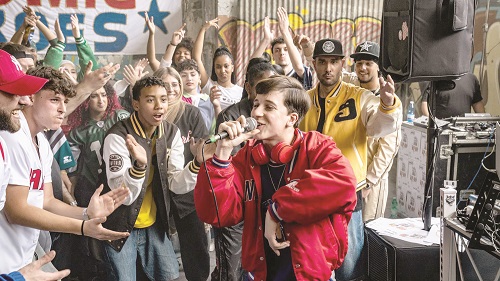
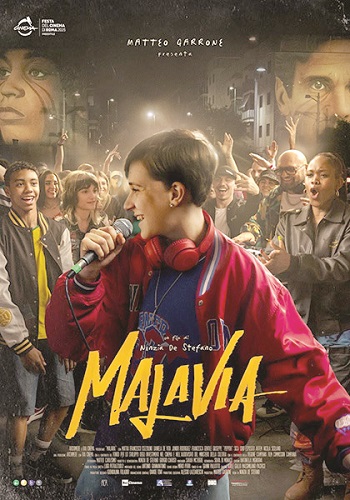
For those who are behind the curve on the Italian music scene, Italian Rap has not only become the most popular genre in the country, it has also made its entrance into theatres and television. Nunzia De Stefano’s upcoming film Malavia premiered at the Rome Film Festival in October, where it won the “Sorriso Diverso Roma Award” for Best Italian film.
In theatres next month, Malavia draws some comparisons to the 2002 hit film 8 Mile, which was loosely based on American Rap Artist Eminem’s rise to stardom. De Stefano’s film follows thirteen-year-old Sasà (played by Mattia Francesco Cozzolino) who dreams of leaving the suburbs of Naples for a career as a Rap Artist.
But this is not the first rapper-based film to hit theatres in Italy. The first narrative film to explore the Italian rap scene was Zeta (2016), which, as you may have you guessed, was compared to 8 Mile. Before that, numerous documentaries were released in an effort to legitimatize and inform the public on just how much the Italian trap and hip-hop culture was growing. Laying the groundwork for rap to emerge as a very profitable market disruptor.
Fast forward ten years to today and that mission has been accomplished. Based on the Spotify Wrapped data for 2025, the top five artists who were driving the highest streaming numbers in Italy were all rappers: Sfera Ebbasta, Shiva, Gué, Geolier and Marracash.
To understand just how far today’s Italian youth has strayed from traditional Italian genres, here are the five most popular musicians of the year 2000, based on year-end charts and album sales: Adriano Celentano, Eros Ramazzotti, Vasco Rossi and Lunapop. These artists mostly wrote romantic songs, while today’s rappers are singing about political disillusionment, hood lifestyle, dual heritage and racism.
At the risk of sounding like a neophobe or traditionalist, the fact that young Italians are adopting an American-like worship of hip hop culture is, to put it mildly, off-putting. It is not that all rap is without merit as a musical genre. It is that it is mostly transient, often vulgar and feels like a cash grab by record labels hoping to exploit teenage malaise.
Case in point, the film’s original song “Malavia”, written by another Italian Rap Artist Speaker Cenzou, has already had its video released and directed by the film’s director Nunzia De Stefano. Good marketing, yes. But are we launching rap careers or telling stories? I guess both. Let us hope both endeavors prove as meaningful as they are successful, lest Italian arts and culture devolve into something many of us thought would never materialize.
Images courtesy of Fandango

Massimo Volpe is a filmmaker and freelance writer from Toronto: he writes reviews of Italian films/content on Netflix