Bellocchio’s Enduring Global Influence

TORONTO – While the European festival spotlight has shifted past May’s Cannes market, the international rollout for Rosebush Pruning, an English remake of a legendary Italian classic, keeps Italy’s profound creative footprint at the center of global industry attention. Helmed by visionary auteur Karim Ainouz, this dark satire features a heavy-hitting cast led by Callum Turner, Elle Fanning, and Riley Keough. It offers a distinct artistic vision that deliberately breaks away from standard, risk-averse formulas.
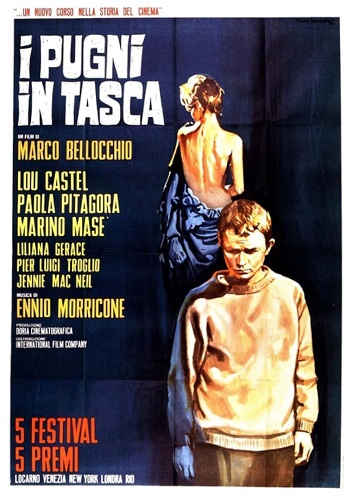
When Marco Bellocchio unveiled his 1965 debut I Pugni in Tasca (Fists in the Pocket) over half a century ago, the film shattered Italian storytelling conventions with a smart examination of institutional and societal decay. As a classic of European cinema, the original film remains a powerful psychological study that changed how movies tell stories.
Today’s commercial film ecosystem, by contrast, frequently seems paralyzed by a fear of artistic risk. The reality that modern global creators repeatedly return to Italy’s radical post-war catalog proves just how inspired the international landscape remains by those initial, boundary-pushing templates.
Ultimately, Italy’s film lineage is a continuous conversation, as this remake proves that Hollywood and global indies heavily rely on Italy’s historic storytelling DNA. By using Bellocchio’s half-century-old structure to shock modern audiences, Rosebush Pruning reinforces a powerful truth: the global industry actively pulls from Italy’s reservoir for stylistic direction.
Aïnouz aggressively recontextualizes the source material, however, moving the narrative from its Italian setting to an opulent villa in Catalonia, Spain. Backed by a smart script from Efthimis Filippou, the film twists the classic text into a surreal critique of modern patriarchal power. Yet beneath this updated exterior, the core thematic architecture remains entirely loyal to Bellocchio’s blueprints.
Crucially, the film avoids stripping away its cultural heritage thanks to structural backing from Italian industry heavyweights. Rosebush Pruning relies heavily on Italian industry infrastructure, bringing global producers together with major local entities like Rai Cinema and Kavac Film. This close connection keeps the movie’s critical spirit alive, demonstrating that Italy continues to act as an aggressive authority behind elite global co-productions.
Reflecting on his decision to tackle the project, Aïnouz emphasized that Bellocchio’s iconic debut “had a huge impact on Italian cinema and storytelling at the time,” rendering it the perfect framework to revisit for a modern parable on elite isolation.
As Rosebush Pruning readies its summer theatrical rollout across the UK and North America, its critical reception remains open. However, its existence confirms a broader truth: the global industry is still fundamentally anchored by the dark, enduring brilliance of Italy’s cinematic maestros.
Poster of Rosebush Pruning courtesy of Kavac Film, Rai Cinema and The Apartment

Massimo Volpe is a filmmaker and freelance writer from Toronto: he writes reviews of Italian films/content on Netflix