Saving Sergio Leone’s Masterpiece
TORONTO – When Michelangelo Buonarroti completed his massive fresco in the Sistine Chapel, Vatican critics called its nude figures “a vulgar display of flesh”, sparking an aggressive censorship campaign to cover them with loincloths. Creative friction between patron and artist has a long history, and the battle over creative control is perhaps more pronounced than ever in modern cinema.
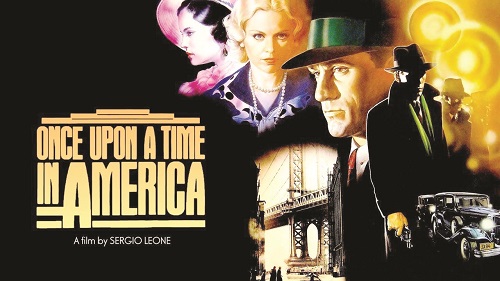
Fans of Sergio Leone will know how quickly the Italian filmmaker aged after 1984 – the year his magnum opus Once Upon a Time in America was released. A 15-year obsession of Leone’s, the film was released internationally in non-chronological format with a running time of 3 hours and 49 minutes. Exactly how Leone intended.
The devastation came when the US distributor for the film (The Ladd Company) cut the movie down to 2 hours and 19 minutes, and rearranged the film’s chronology giving it a linear narrative for American audiences. Hollywood critics saw through the hack job and panned the film. For Leone, his ultimate passion project was a complete failure, but not by his own hand. Sadly, the creative disillusionment was seen as a contributor to his rapidly declining health, thereafter.
Now, his children Raffaella and Andrea, of the Leone Film Group, are spearheading the Once Upon A Time in America origins movie, a biographical feature film about the making of Leone’s masterpiece. The project is framed as a story about “a man who chases a dream for his entire life”.

Once Upon a Time in America was adapted from the novel “The Hoods”, written by Harry Grey, while he was serving time for auto theft at Sing Sing Prison. The book had so captured the interest of Leone that he tracked down the author for secret interviews and famously declined the offer to direct The Godfather – just to keep his schedule open.
According to reports, the biopic will adopt a nonlinear structure to mirror Leone’s signature style. “It’s basically the story of a man who chases a dream for his entire life. Or, at least, who took 15 years to make a movie and didn’t do anything else until he managed to make it. And it’s told with my father’s irony”, says Raffaella Leone.
The relentless power struggle between filmmakers and studio executives isn’t simply a case of good vs evil. And the marketplace almost never lies. From the studio’s perspective, it’s about earning potential. A 4-hour film can only be shown twice a day, while a 2-hour film can render double or triple the screenings.
And on rare occasions, executives might have a keen eye for local audience expectations. In the case of Giuseppe Tornatore’s Cinema Paradiso (a box office flop in Italy), American distributor Miramax cut 30 minutes from the original edit. The film went on to win the Oscar for Best Foreign Language Film in 1990, and became an international smash hit. Art always finds a way.
Image of Andrea and Raffaella Leone courtesy of Stefano Pinci
Massimo Volpe is a filmmaker and freelance writer from Toronto: he writes reviews of Italian films/content on Netflix