The Tognazzi Legacy, Reimagined
TORONTO – Director Maria Sole Tognazzi’s new project, Iside, which she calls a magical and personal narrative, has officially begun in Rome. Co-Produced by Cattleya and Rai Cinema, the film is positioned as a high priority project and stars a multi-generational ensemble of Italian female talent, including Monica Bellucci, Jasmine Trinca, Romana Maggiora Vergano and Tecla Insolia.
Iside follows a former classical and contemporary dancer Veronica (Monica Bellucci), who runs a local dance school in the Castelli Romani region. Veronica’s deep and ethereal connection with her daughter Chiara (Jasmine Trinca) is explored when both mother and daughter become pregnant. Monica Bellucci’s character is described as having a magnetic energy that ventures beyond the confines of personality – and into something more elevated or luminous.
Female-centric storytelling is the director’s trademark, as Tognazzi is widely considered one of the defining female voices of Italian Cinema. Her father Ugo Tognazzi was of course an icon, considered of one the “five colonels” of Italian comedy in the 60s and 70s – a group of actors that included Vittorio Gassman, Marcello Mastroianni, Alberto Sordi, and Nino Manfredi.
But while discussing her film Me, Myself and Her in 2015, Tognazzi was clear about the distinction between her films and her father’s. “In the past, I have often been told that in my films I marginalize men or treat them badly, but I think it was about time that stories were told from a female point of view, and that men were seen through the eyes of women”.
Like Tognazzi, many of her female colleagues perceive her father’s era as having been plagued by a pervasive sexism, that showed itself at both ends of the business. But Tognazzi acknowledges that her father was a very “free and anarchic man” who believed in total freedom of expression – a quality she consciously brings to her female-centric stories.
Ironically, she was accused of man-hating when her films challenged the predominant male view of femininity and womanhood. “Seeing things from a female perspective does not mean [that men are] being mistreated, but stepping out of the view of a cinema that has been misogynistic for decades”. Tognazzi is focusing on creating complex and robust female roles – which she believes have been overlooked historically.
That’s certainly true to some degree, but the full context of Italian cinema tells a richer story. The early days of Italian cinema, notably the Neorealist era, was built on the backs of colossal female characters. Actresses like Anna Magnagi (Rome, Open City) and Sophia Loren (Two Women) for instance, played strong and resilient women. What storytellers – in this case men – were communicating was the importance of a strong matriarch.
As for her father’s era, better known as the era of the “commedia all’italiana”, many of those films were less about depicting women through a sexist lens, and more about satirically mocking the “patriarchy”. Mocking the “Latin Lover” myth and depicting men as buffoonish wasn’t a service to men, but an acknowledgment of their follies.
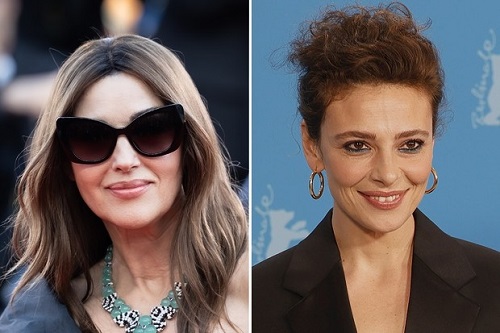
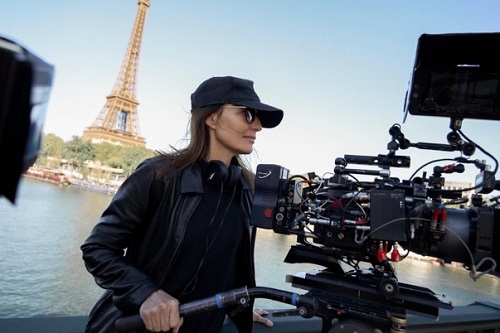
In the pic at the top of the article, Monica Bellucci and Jasmine Trinca; above, Maria Sole Tognazzi

Massimo Volpe is a filmmaker and freelance writer from Toronto: he writes reviews of Italian films/content on Netflix