Judas’ Gospel Questions Free Will
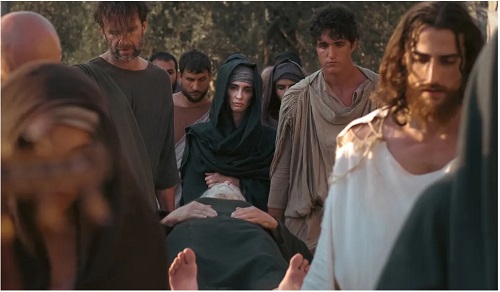
TORONTO – For those who enjoyed watching Jesus-themed films during the Easter holidays, Giulio Base’s latest release Judas’ Gospel is keeping the spirit alive in theatres. The film, which premiered at the 78th Locarno Film Festival in August, arrived in Italian theatres on April 2nd via Minerva Pictures Distribution – and will likely platform on Prime Video or Apple TV following its theatrical run.
A former apprentice of the legendary Vittorio Gassman, Giulio Base now serves as an Artistic Director for the Torino Film Festival. His career spans four decades during which he directed nearly 30 films, acted in over 40 and wrote 16 TV and film projects.
But while his resume boasts a variety of stories and genres, Base is mostly known for his biographies of Saints, such as Padre Pio: Between Heaven and Earth (2000) and Maria Goretti (2003), as well as the international production The Final Inquiry (2006) starring Max von Sydow and Dolph Lundgren.
It’s also no coincidence that religious-themed storytelling is the director’s sweet spot, given that he received a doctorate in Theology at the Pontifical Gregorian University in Rome. His academic background offers a great base for the sort of philosophical and existential explorations evident in Judas’ Gospel.
The film catches up with Judas as he’s reflecting on his life while suspended on a tree – the tree upon which the Bible states that he hung himself. But while the Book of Matthew places Judas’s tree in “potter’s field” (outside Jerusalem in Akeldama), Base connects Judas to his former Rabbi, Jesus, during the crucifixion.
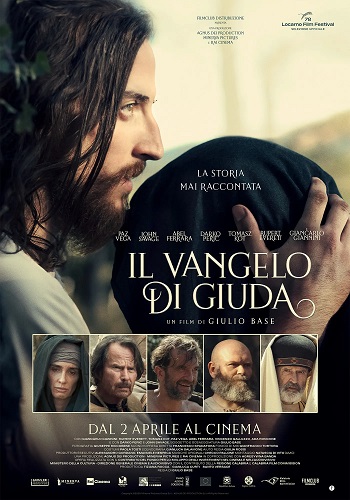
As per the synopsis: “Jesus on the cross, Judas on the tree. They are mirror images: one needs the other for his destiny to be fulfilled”. But Base takes the sentiment further, perhaps even into Gnostic belief streams. The Gnostics of course were a breakaway Christian sect during the early church.
They believed that salvation was attainable through internal knowledge (gnosis) rather than through ritual and institution-based faith. And in 1978 the so-called “Gospel of Judas” was unearthed from a cave near El Minya, Egypt.
Rich with Gnostic terms, this alleged gospel relays a private dialogue between Jesus and Judas, whereby the Messiah reveals esoteric truths to Judas, and reveals him as a partner rather than a betrayer. It would seem Base’s new film aligns with the notion.
Base believes that, “Giving him (Judas) a voice is an attempt to defuse the dichotomy between good and evil, between faith and guilt, between love and condemnation. This involves questioning the very idea of free will. If his redemption had to come through betrayal, then who is Judas really? Just a guilty person? A damned soul? An instrument? Or is he perhaps himself a victim?”.
Judas’ Gospel takes a stylized approach, perhaps even modelling itself after Mel Gibson’s Passion of the Christ. The film is almost devoid of dialogue, an effort to emphasize the meditative and sensory experience, while the entire movie was shot using only natural light. If you enjoy impassioned filmmaking, this is one to watch.
Images courtesy of Minerva Pictures

Massimo Volpe is a filmmaker and freelance writer from Toronto: he writes reviews of Italian films/content on Netflix