How the Bank of Italy Helped Early Hollywood
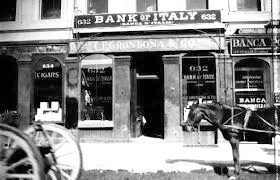
TORONTO – There is a little-known story about Hollywood’s beginning that involves a first-generation Italian banker, named Amadeo Giannini, and the Bank of America. This latter institution, Bank of America, resulted from a merger between Giannini’s original Bank of Italy and other pre-existing financial lenders.
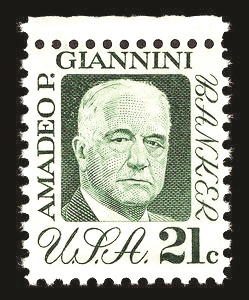
Giannini, whose inspirational story is finally being made into a movie, made a name for himself by lending money to working class citizens and Italian immigrants who were denied by other banks. Born in San Jose California in 1870, Giannini, at the age of thirty-four, founded and operated his Bank of Italy out of a converted Saloon in San Francisco’s Jackson Square neighbourhood.
His Bank of Italy famously loaned money to some of early Hollywood’s future stars. He backed classic films like Gone with the Wind, King Kong and It’s a Wonderful Life, which was directed by Frank Capra. Financed and inspired by Giannini, Capra loosely based the protagonist George Bailey (played by Jimmy Stewart) on the Italian Banker. Bailey of course was a benevolent banker whose spirit of self-sacrifice was his double-edged sword.
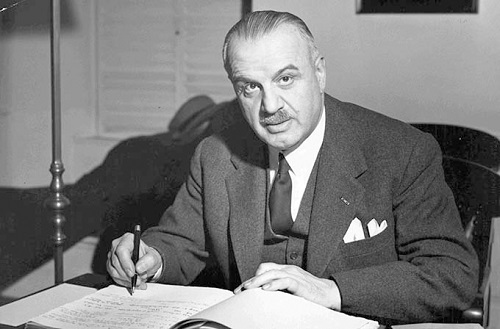
Other beneficiaries of Giannini’s good will were none other than Charlie Chaplin and Walt Disney. Columbia Pictures and United Artists, founded by Chaplin and Torontonian Actress, Mary Pickford, were launched with initial capital from the Bank of Italy. And Walt Disney was famously loaned $1.7 million to finished his first animated feature Snow White and the Seven Dwarves.
Giannini would also finance other classic Disney films such as Fantasia, Pinocchio, Dumbo, Cinderella and Bambi – as well as fund the initial construction of Disneyland. The Italian American envisioned a grandiose film Industry which was rapidly developing in California – with Studios having moved there in the early 1900s from the East Coast.
Now, over a hundred and twenty years after Giannini loaned his first dollar to Hollywood, the industry is finally ready to tell his story. Behind the camera will be renowned Italian filmmaker Giuseppe Tornatore, known best for his nostalgic ode to cinema and Best Picture-winning film, Cinema Paradiso.
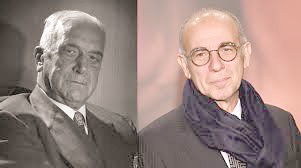
“I enthusiastically accepted the producers’ proposal to revisit a project I had worked on a few years ago: the story of Amadeo Peter Giannini, the Italian who revolutionized the American banking system. It’s an almost legendary story that seems born to be told on film”, said Tornatore of the Giannini Project (aptly titled The First Dollar).
Producer Simone Gattoni touched on Giannini’s revolutionary money-lending approach, which saw him base his loans primarily on the borrower’s character, before demanding [sometimes extensive] collateral. “Bringing this work to theaters is an act that helps preserve memory but it also represents a message for the present: the story of an Italian American who changed the world without ever losing sight of people – a look at ethical capitalism”.
Images of Giannini and Tornatore courtesy of Jerry Cooke and Stephane Cardinale

Massimo Volpe is a filmmaker and freelance writer from Toronto: he writes reviews of Italian films/content on Netflix