The Man Who Toured Hitler and Mussolini around Florence
TORONTO – Whether it is down to Donald Trump’s perceived “dictatorial” rule or the so called “Trump Derangement Syndrome”, his presidency has clearly contributed to a steady production stream of Hitler related films, since 2016. A simple “Trump” search on Netflix will turn up 3 Hitler documentaries, not to mention these gems: “Jeffrey Epstein: Filthy Rich”, “Ghislaine Maxwell: Filthy Rich”, “How to Become a Tyrant” and “Dirty Money”.
As for Italian audiences, they have never been so strongly reminded of Mussolini’s blight on their nation’s history as they have been since Trump was elected; insert protestors holding “Trump/Mussolini” placards at his 2016 inauguration. From films to TV Series like Sono Tornato, Mussolini Never Did This; Robbing Mussolini and Mussolini; Son of the Century, audiences have had their apparent fetish for films about fascists well nourished.
It is an unexpected market however, given most Italians – apart from history enthusiasts – would prefer to forget that the man ever existed. And yet Mussolini films seem to be sprouting like weeds these days, with more in the pipeline surely – while Trump remains in office. The latest, directed by Anne Paulicevich, is The Man Who Could Change the World.
Paulicevich’s film, starring Elio Germano, just wrapped shooting, chronicles four days in 1938 when Hitler visited Italy. While few details have been released, the film appears to center around the observations of the then-renowned Italian Archeologist Ranuccio Bianchi Bandinelli.
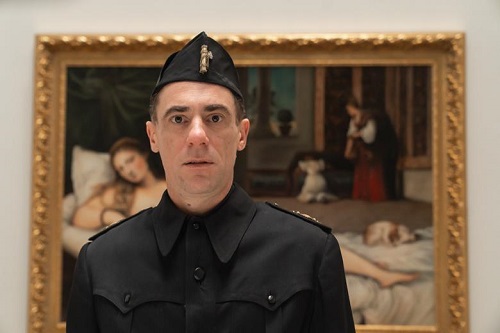
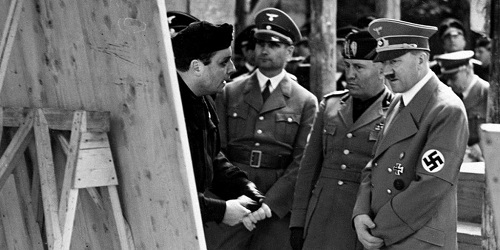
Bandinelli, an anti-fascist, was forced to be the cicerone – tour guide – for Hitler and Mussolini during their tour of Florence in 1938. He had been selected for the task on the basis of several merits, the two most pertinent being his fluency in German and his expertise in Florence’s artistic heritage.
Bandinelli would eventually publish his notes regarding the event in 1962 with Dal Diario di un Borghese. Another release was published after his death in 1995 titled Il Viaggio del Führer in Italia. The intrigue of the affair, from Bandinelli’s perspective, rested with the fact that to him Mussolini was a brutal opportunistic traitor and enemy to the working class – despite his former socialist ties.
And to be the man to have toured two of history’s most heinous despots around the Uffizi’s hallowed halls, naturally festered in Bandinelli’s mind thereafter. Especially considering the Fuhrer’s visit to Italy was only a year prior to his invasion of Poland.
In his memoirs, Bandinelli also noted Mussolini’s glaring disinterest in the artwork, quoting him as saying “Here we would need a week”, while impatiently hurrying the group forward. By contrast, Hitler showed a deep interest in the paintings, according to Bandinelli.
But, perhaps, the most absorbing part of Bandinelli’s diaries was the mention of his personal temptation “to take action”, and to have fantastically changed the course of Western History, as it were. Instead, we are left with a movie to contemplate his regrets.
Images courtesy of Versus, Indigo Film, Paper Film and NiKo Film

Massimo Volpe is a filmmaker and freelance writer from Toronto: he writes reviews of Italian films/content on Netflix