Picarella’s “Hybrid Cinema” Evocative of Neorealism
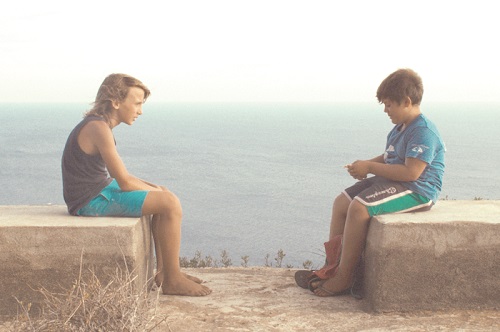
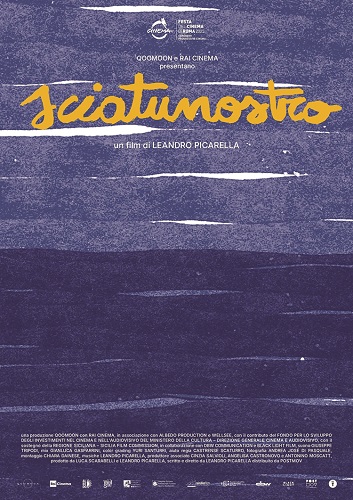
TORONTO – Leandro Picarella’s “simple and universal” story – Sciatunostro – about a childhood friendship between two boys is coming to theatres on April 9th. It continues the recent trend [and perhaps even a return] towards original storytelling and resonant themes, which are once again populating cinemas. Recent examples include films like Sorrentino’s Parthenope, or the Norwegian Oscar winner Sentimental Value, and even American popcorn fare like Solo Mio and Project Hail Mary.
But Picarella’s poetic coming-of-age story isn’t just a nostalgic trip into the filmmaker’s past. It’s a hybrid film that he calls “docufiction” – a fusion of narrative storytelling with documentary footage. And add to that a heavy dose of what the late singer Pino Daniele would’ve called “alleria”, or a veiled joy that comes over you like a light wind – or a brief reminisce.
The Sicilian term “Sciatu” means “breath” or “soul” depending on its use, and the film according the director, “is the story of those who leave and those who stay. Of those who go towards life and those who celebrate it by preserving its memory”. The young boys in the film, Ettore and Giovannino aged 7 and 11 respectively, learn to cope with separation after growing up together on Linosa island.
The plot borrows from Picarella’s own summer visits to the island of Linosa, spanning two decades. Situated between Sicily and Tunisia, Linosa is one of the most remote and preserved landscapes in the Mediterranean. There’s a feel of temporal isolation or suspended atmosphere on Linosa, which makes it the perfect setting for a film about preserving memories.
“The island of Linosa is a living body that breathes together with its inhabitants. It is earth, sea, silence, and wind. It is the gaze of childhood, but also the echo of those who passed before”, explains Picarella. One of those echoes from the past was Pino Sorrentino, an amateur videographer who documented daily life on Linosa for decades.
During one of the director’s frequent visits to the island, a serendipitous meeting with Sorrentino birthed the idea for Sciatunostro. The videographer’s archival footage, some of which is visually arresting, is seamlessly interwoven into Ettore’s and Giovannino’s childhood scenes and flashbacks.
Picarella was so in love with the location and its people that he chose to work with non-professional actors, including the two young leads. The neorealist approach was aimed at preserving Linosa’s distinct dialect and way of life.
The slow-life sanctuary island depicted in Sciatunostro will likely win the hearts of audiences who would have otherwise never heard of this part of the Pelagie Islands. That is unless they’ve eaten Linosa’s famous wild capers, which are sold to Michelin restaurants across Europe.
But if you ask Picarella, the film’s intention is simple: “Sciatunostro is not just a story to tell, but a journey made of laughter, games of tedesca, complicity, and small moments that remain in the heart”.
Images courtesy of Qoomoon and Rai Cinema

Massimo Volpe is a filmmaker and freelance writer from Toronto: he writes reviews of Italian films/content on Netflix