Armani and Bugatti Films, Made Out of Italy
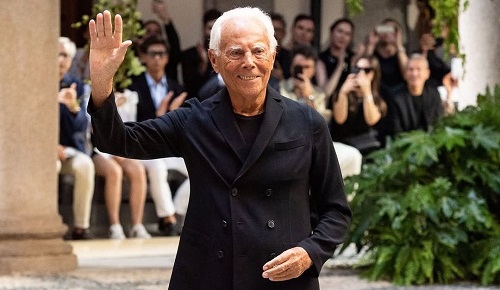
TORONTO – Two prestige film projects about Italian Icons, Giorgio Armani and Ettore Bugatti, are no longer being shot in Italy, according to Italian Producer Andrea Iervolino. The news came as a bit of a shock this week as Iervolino has become one of Italy’s most vocal advocates for making Italian cinema great again. But what the big print giveth, the fine print taketh away.
Iervolino’s vision for Italian Cinema and its industry has always included a “synergy with the international film industry”, focused heavily on partnerships with foreign partners. As recent as last summer the Italian Producer announced that he was brokering a U.S./Italy co-production treaty with Mel Gibson, a “special film Ambassador” under the Trump Administration.
He also recently announced MIFE (Made in Italy Film Export), a new federation dedicated to film professionals working within the country’s audiovisual sector, as a mission to help Italian content compete on global markets.
And on the domestic front, Iervolino is presumably still moving forward with his plans to build a Film Studio Complex in Tuscany, with reports as recent as early 2025 confirming his commitment to the 50-million-euro project. The studio plans were announced as part of a “new era” for Iervolino’s company, one that was attracting a 200-million-dollar Bahraini development fund.
With such a tidal wave of projects, initiatives and enthusiasm toward bolstering the Italian film industry, why is Iervolino making two of Italy’s great success stories outside of Italy?
According to Iervolino’s Production Company: “The decision regarding the filming location (for the Armani Project) followed an in-depth review of the investment plan and extensive discussions with the pool of U.S. banks and funds supporting TAIC Funding [Iervolino’s company], in light of the current Italian production and administrative environment”.

Despite Iervolino’s oft-stated desire to keep his productions in Italy, both the Armani Project and Bugatti – The Genius are heading to Central Europe. Hungary to be exact, which has established itself as one of the largest production centres in Europe, with advanced facilities like Origo Studios in Budapest and NFI in Fot. In 2024 the country recorded over $1 billion in direct production spend.
Still, their tax rebate program while praised for its stability and ease of use, has a lower headline percentage (30%) than Italy’s 40%. The presumed hurdle for Iervolino and other Italian Film Producers is the perceived “uncertainty” of Italian based productions. Mainly because the application for tax credit was closed for much of 2024, during the Ministry’s reform process, and the backlog has created a bottleneck – forcing productions to leave Italy.
Iervolino however insists that he is “deeply in love with Italy and the Italian Identity” and will “continue to develop projects dedicated to great Italian icons…by producing them abroad”.

Massimo Volpe is a filmmaker and freelance writer from Toronto: he writes reviews of Italian films/content on Netflix