Morricone’s Opera Arrives Posthumously
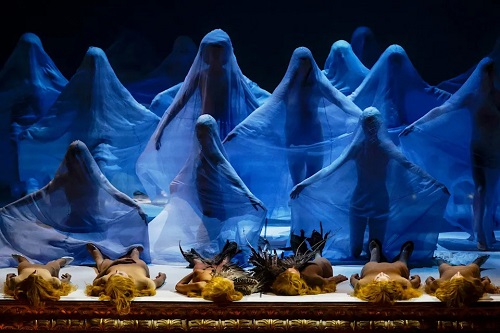
TORONTO – Five years after his passing, film composer Ennio Morricone’s only written opera was staged and performed. The Italian musician’s “Partenope” premiered on December 12 in Naples’ Teatro San Carlo, with subsequent shows on the 14th and 15th. Prolific as he was, Morricone was known only for his film compositions which amounted to nearly 500 scores – including classics like The Good the Bad and the Ugly, Cinema Paradiso and Once Upon a Time in America.
Unfortunately, his recognition from the classical community – opera being the penultimate expression of the classical genre in Italy – was received posthumously. Partenope was a 25-year goal for Morricone, having written it back in 1995. His ambition to perform in an Opera House stemmed from a widely held belief that it requires a mastery of the artform. Conversely, the classical community has erroneously viewed film scoring as merely “functional”. Or worse, as pop music.
Morricone’s work, despite being recognized for its versatility and unique use of instruments like electric guitars and harmonicas, was seen by some as a second-rate cultural expression.
This attitude is also reflected in North America’s dismissiveness of his non-Italian colleagues who reflected his approach. Renowned film composer John Williams, who famously wrote the Imperial March for Star Wars and the theme for Superman, was criticized by American composer Philip Glass, who dismissed his work as “nostalgic Hollywood escapism”.
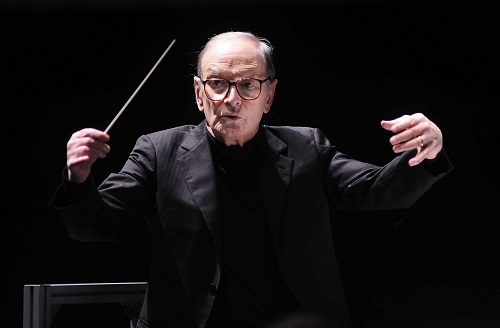
Morricone’s collaborator on his autobiography, Alessandro De Rosa, remarked in an interview that the Italian icon “Read as a sign of destiny the fact he would not make his debut in the opera world. I’m sure that if he were alive now, he would have taken the challenge and would have dialogued with the orchestra and the director, tirelessly, like a young kid”.
In Morricone’s absence, Partenope’s director Vanessa Beecroft and conductor Riccardo Frizza were left to construe and interpret notes left behind by the visionary film composer. “It would have been wonderful to be able to talk to Morricone about his musical choices…but we had to understand them from what he left us and tried to interpret them in the best way”, Frizza said.
“For instance, he chose not to use violins in this orchestra, instead favoring flutes, harps and horns, which appear in Greek mythology. Then you have the modern instruments, lots of percussion, with the Neapolitan sounds provided by tambourines and putipu”, Frizza added. The putipu’ being a friction drum used in local folk music.
The opera of course tells the story of the mythical siren Partenope who after failing to spellbind Odysseus with her song, casts herself to sea and drowns.
As the story goes, her dead body drifts onto the shores of the Gulf of Naples and dissolves into the land, giving birth to the city of Naples. A city embodying her beauty and resilience.
Was it the resiliency of Partenope and the Neapolitans that spoke to the musician? Perhaps Morricone secretly hoped that like the mythical siren, his lost work would drift into an Opera House long after he was gone – and secure that one elusive accolade.
Image of Partenope Opera courtesy of Salvatore Laporta
Massimo Volpe is a filmmaker and freelance writer from Toronto: he writes reviews of Italian films/content on Netflix