Social Justice infiltrates Italian Rom-Com
TORONTO – Even the most wide-eyed optimist would struggle to ascribe labels such as “evolved” or “enjoyable” to the 21st century. Or maybe not. Maybe for some it’s been an exhilarating adventure witnessing smart phones zombify humanity, watching rampant rioting and extremism on college campuses, and seeing the gender and race wars escalate. Welcome to the tribalism of 2026.
A tribalism which has no less seeped into the arts. And while no more political now than they ever were, the arts have in some ways developed into something so limp and spiritless that the moniker of “art” no longer fits. What’s worse is that the affliction has reached Europe. We are now being subjected to Rom-Coms with social justice themes – in Italy.
For context, Romantic Comedies came to the fore circa the 1930s and were intended as lighthearted escapism during the Great Depression. In foodie terms, Rom-Coms were the movie equivalent of a hamburger and fries. A guilty pleasure. Two hours of brainless escapism. Boy meets girl, they lust, they argue, they marry. The end.
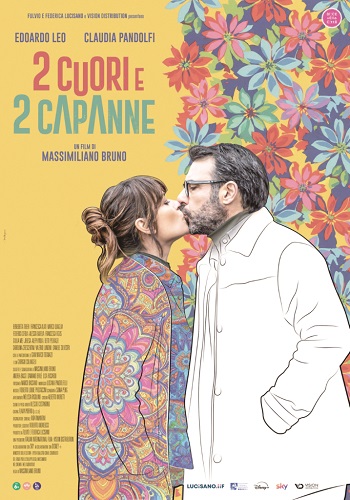
But Massimiliano Bruno’s upcoming romance Two Hearts and Two Cabins could potentially be signalling a new trend. It follows a love affair between a high school literature teacher with heavy feminist leanings and her more traditionalist rigid boss.
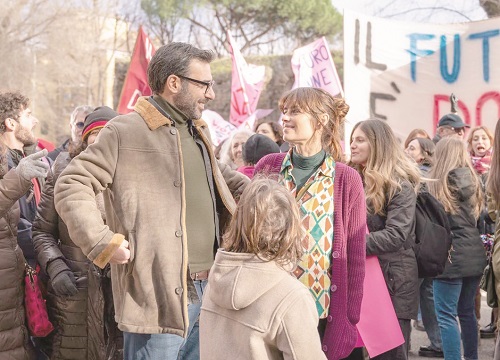
ù“Men are more shallow, women are more analytical. We put our brain into things. We arrive through thought, we are different. Let’s put it like this”, says Claudia Pandolfi’s character to her love interest. His reply: “You’re one of those rodents that keeps popping up like mushrooms lately. Like those protestors. The ones who yell patriarchy! Equality! Equality!”.
It’s hard to believe that whatever audience this is intended for is being wooed by a Miss Minneapolis meets Mr. Fort Worth scenario. Or in Italian terms, Miss Bologna meets Mr. L’Aquila. Yes, some well-intentioned and necessary battles have been fought on the social justice front over the last ten years, but moviegoers aren’t typically lining up for lectures about toxic masculinity on date night.
In Bruno’s defense, he’s attempting to lower the temperature between the sexes by reflecting their behaviors on screen. “The most interesting part of the film is [to highlight] the fact that you can say things even if we don’t agree, but if they are said in the right way then one can listen and try to refute them”, Bruno says.
But the sentiment ignores a larger issue – political correctness. Or the idea that protecting someone’s sensitivities at all costs supersedes freedom of thought and speech. The freedoms that screenwriters once swore by, until it became common practice to have “gender and race consultants” fine-tune scripts.
Or…maybe audiences do want their characters to spout lines like “No one is born a feminist. We all come out masculinists and have to work on ourselves”. How’s that for a Valentine’s movie? Check your local listings come Jan 22nd.
Images courtesy of Vision Distribution

Massimo Volpe is a filmmaker and freelance writer from Toronto: he writes reviews of Italian films/content on Netflix