
Magna Graecia, at the crossroads of peoples

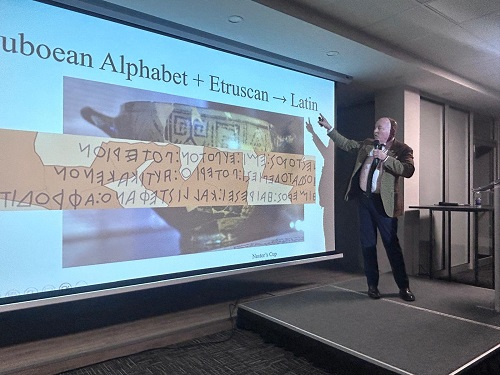
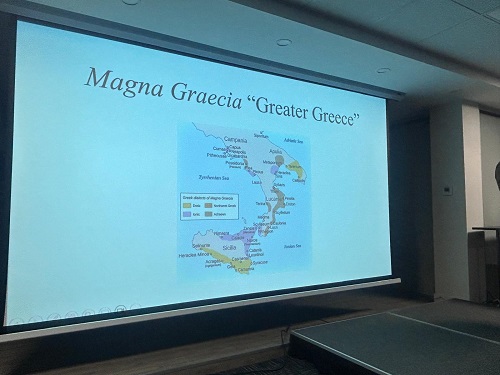
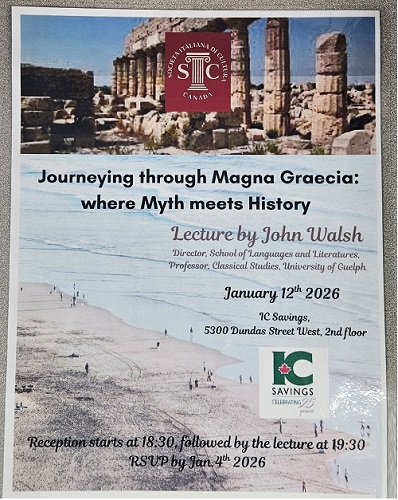
TORONTO – I wanted to attend the lecture on Magna Graecia, January 10, planned by the Italian Canadian Credit Union and Savings, “affectionately” known as ICS, in part because I was born in that “territory”. So was Fausto Gaudio, the president and CEO of ICS, who gathered a small team to develop a series of programs to illustrate the “cultural, commercial, political and scientific legacy” of the peoples who emerged from or populated the area over millennia. They opted to start with an introductory session on Magna Graecia, with guest speaker Prof Walsh from the University of Guelph.
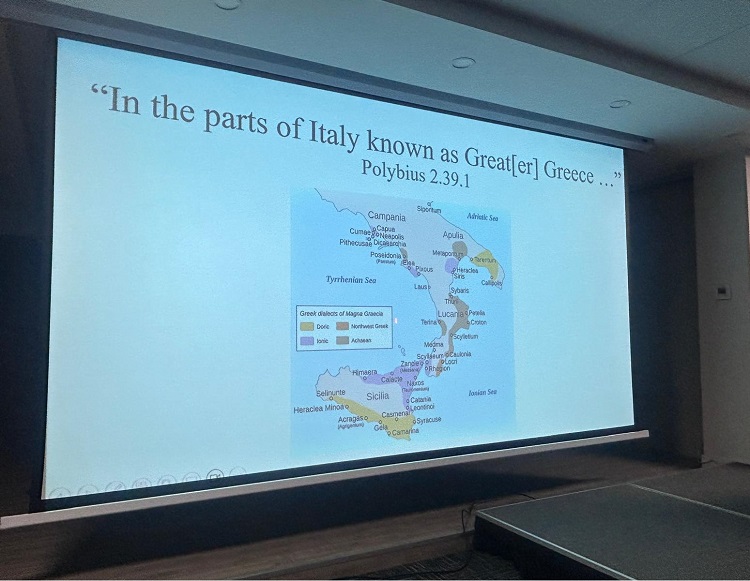
The term, coined 2,000 years ago to identify a geographical area of Southern Italy, by Latins no less, that drew ancient civilizations to the Italian Peninsula from areas bordering the Eastern, Southern Mediterranean and the Aegean Seas. As Prof Walsh apologetically said, the history of the area would fill entire libraries. Suffice it to say it is a fascinating geopolitical area that attracted peoples from everywhere in the Mediterranean Basin – seafarers and others who “ventured from home”, partially because of its location, but primarily because of its potential in an evolving world 4,000-5,000 years ago. It is still there.
The interactions and adaptations of those peoples, indigenous and otherwise, could only be “rich, impactful and transformative” and long lasting. Prof Walsh acknowledged as much, even as he chose to highlight the Hellenic (Greek) “migrations” evidenced with the collapse of some early urban cultures in the Aegean and the interminable wars for domination from c.1,500 pre-Christian Era and ending with Roman hegemony in the second century B.C.
One could opt to minimize his effusive sense of awe at the enterprise and innovation that emerged from the often-catastrophic consequences of mayhem and destruction of that period. The already advanced language and writing skills that bore testimony to what was there and the challenges emerging civilizations faced were already in print, even as metaphors and literary techniques invited interpretations and “laws”. Think Homer (Trojan Wars, Odessius) and the etymology of names and places on the Italian peninsula.
Or the samples of the creative arts that survived the three thousand years of time between then and now; or the architectural wonders like the temples of Hera in Paestum, south of Naples; or the engineering marvels to capitalize on and commercialize natural resources… the list goes on.
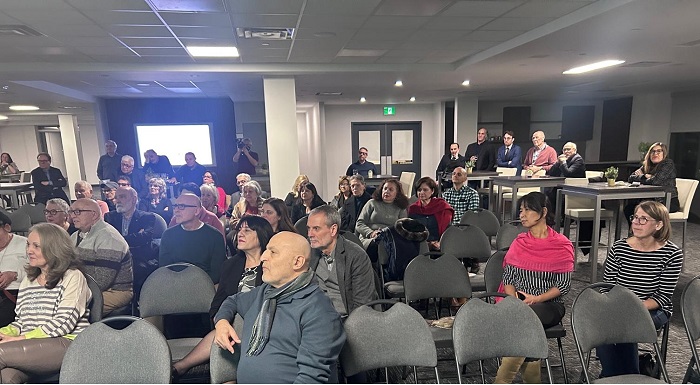
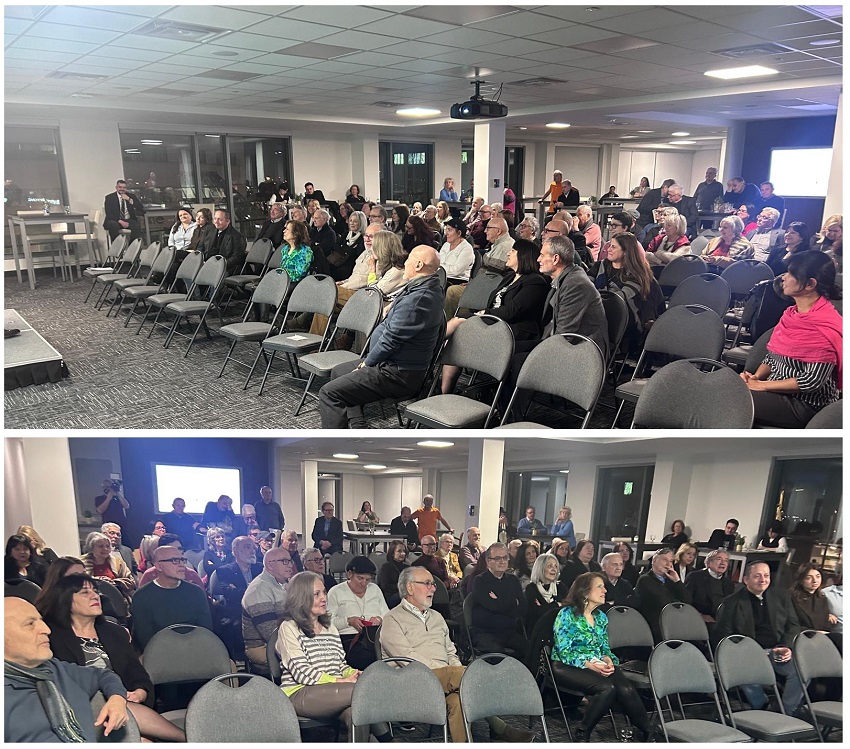
The lecture evolved into “an invitation” to question and comment, aux debates de salon. After an hour and fifteen minutes, the collection of guests wanted to wax eloquent and insightful. I took that as a sign of personal and regional pride that someone had “validated” their history and culture.
From my perspective, that would have been ICS for hosting such as seminar where myth and legend meet history. Looking forward to the next one. Great interaction.
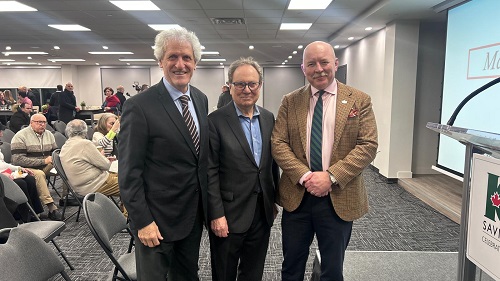
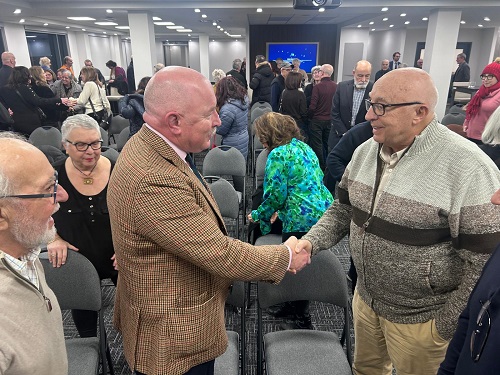
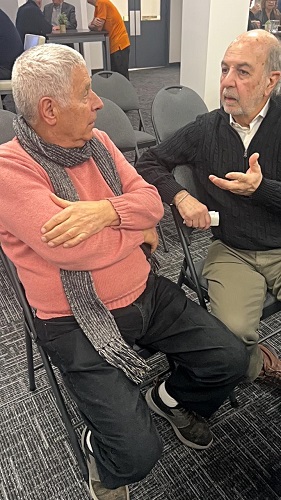
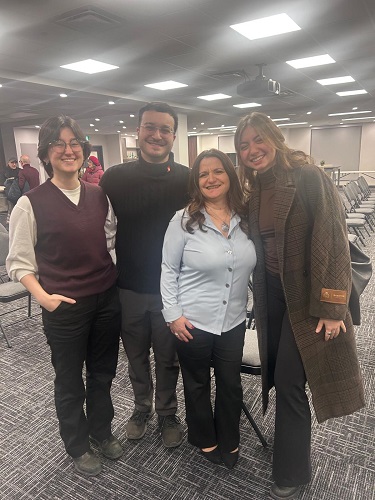
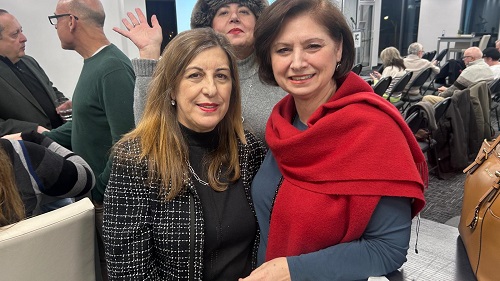
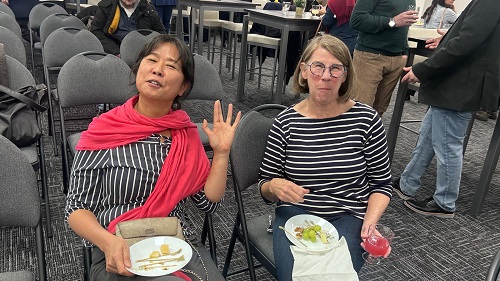
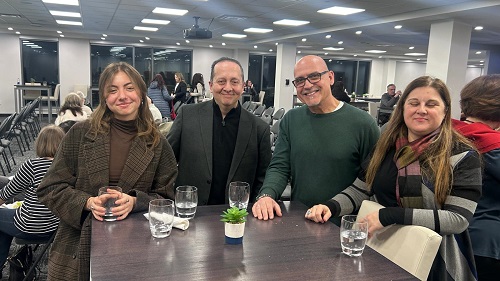
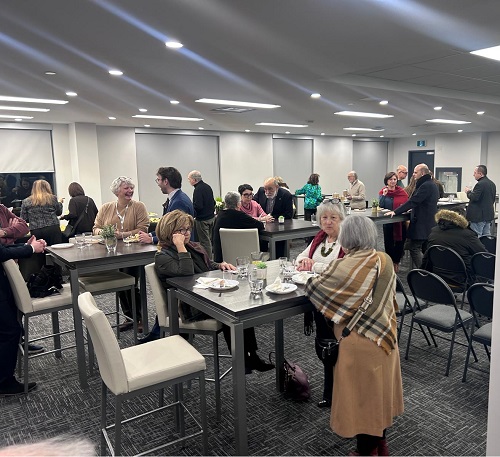
Here below is a photogallery from the event (photos: Corriere Canadese)


More Articles by the Same Author:
- Corriere Canadese welcomes new Consul General Bertozzi
- Il Corriere Canadese dà il benvenuto al nuovo Console Generale Bertozzi
- “I want to serve”: Christopher Mammoliti’s challenge to revitalize the TDSB
- NCIC breaks silence on cancellation of International Languages
- Terze Lingue, il NCIC rompe il silenzio